
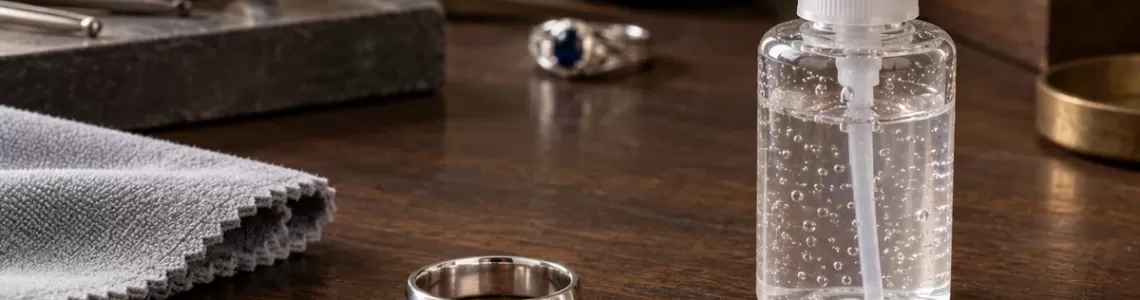
Hand sanitizer is made for skin, not for cleaning a sterling-silver ring. A brief accidental contact is not evidence that a plain solid-sterling band has been ruined, but formulas vary and the ring may include finishes, plating, adhesives, treated gems or porous materials that react differently from bare silver. The safest routine is to remove the ring when practical, sanitize the hands as directed, let them dry completely, and put the ring back on only after checking that no wet gel or residue remains.
Do not treat alcohol percentage as a jewelry-safety rating. The U.S. Centers for Disease Control and Prevention recommends at least 60% alcohol when soap and water are unavailable, while the U.S. Food and Drug Administration regulates hand sanitizers as over-the-counter drugs. Those public-health instructions answer how to clean hands; they do not certify a formula for silver, rhodium, enamel, glue, pearls, dyed stones or other ring components.
The ring is more than a metal label
Before deciding how cautious to be, identify the whole construction. A plain, solid sterling-silver band is a different object from a sterling ring with rhodium plating, an oxidized recess, a glued decorative element, enamel, pearl, turquoise, dyed chalcedony, fracture-filled stone or coated gem. A product page that says only “925” describes silver fineness, not every surface and attachment.
The Federal Trade Commission explains that sterling silver contains 92.5% silver and that a 925 mark means 925 parts per thousand are pure silver. That disclosure does not prove that the ring is unplated, solid throughout, free of solder, safe for every chemical, or set only with untreated stones. Use the separate guide to 925 stamps versus controlled hallmarks when a listing relies heavily on a mark.
Ask the seller for the metal, plating, finish, stone identity, known treatments, setting method and cleaning instructions. If any of those are unknown, choose the more conservative routine: remove the ring before applying sanitizer and avoid using sanitizer as a surface cleaner.
What is in hand sanitizer?
Alcohol-based hand sanitizers commonly use ethanol or isopropyl alcohol as the active ingredient. CDC guidance says to choose at least 60% alcohol when soap and water are unavailable and to rub the product over all hand surfaces until dry. FDA likewise advises allowing sanitizer to dry rather than wiping or rinsing it off early.
The active ingredient is only part of the formula. Products may also contain water, thickening agents, humectants, fragrances, colorants or other inactive ingredients. Exact composition varies, and a clear gel is not automatically chemically simple. A ring manufacturer may also use a finish or treatment whose compatibility is not obvious from appearance.
This is why two shortcuts fail. “Alcohol evaporates, so every ring is safe” ignores residues and non-metal components. “Sanitizer always destroys silver” is also unsupported. The useful question is narrower: what materials and treatments are present, what contacted them, and was the exposure brief, repeated or prolonged?
Plain solid sterling silver: what can be said safely
Silver tarnish is mainly associated with sulfur-containing gases. The Canadian Conservation Institute explains that silver sulfide forms when silver reacts with sulfur compounds and that humidity can accelerate tarnishing. Alcohol content alone does not prove that one application caused a tarnish layer.
However, a ring worn through repeated wet applications can trap gel, skin oils and moisture against the finger or in engraving, seams and recesses. Residue can change how the surface looks or feels even when the metal has not suffered permanent damage. Repeated rubbing while residue or grit is present can also add fine wear marks to a polished surface.
If a plain sterling band has brief incidental contact, let the hands and ring dry. Inspect the ring under neutral light. If a film remains and the maker permits routine washing, use mild care appropriate to the exact construction rather than adding more sanitizer, toothpaste, bleach, ammonia or an unknown dip. The guide to sterling-silver scratches and finish wear explains why ordinary contact marks are not a purity test.
Why stones and treatments change the answer
GIA advises keeping jewelry away from chemicals because they can discolor metals and harm delicate or porous gems. Its gem-treatment guidance is especially important: alcohol or acetone can dissolve some dyes, and heat or chemicals can affect coatings, fracture fillings and impregnations. A stone that looks durable may still contain a treatment with a different stability limit.
Pearls, coral, turquoise, opal, amber and some treated materials deserve particular caution. GIA says pearls can be damaged by many chemicals and should be wiped with a soft clean cloth after wear. Its broader care guidance notes that porous gems and treated stones can be affected by chemicals or solvents. Do not assume a ring is safe because the visible stone is hard; hardness measures resistance to scratching, not resistance to solvents, coatings or dehydration.
When treatment is not disclosed, the correct status is unknown. The gemstone-treatment disclosure guide explains why “natural,” “genuine” or a species name does not answer whether dye, impregnation, coating or fracture filling is present.
Plating, oxidized details and special finishes
A rhodium-plated sterling ring has a surface layer that should be evaluated separately from the sterling substrate. A darkened or selectively oxidized ring intentionally uses contrast in recesses. A satin finish relies on a controlled scratch pattern, while a polished finish reflects light from a smoother surface. None of these appearances should be “corrected” with sanitizer or aggressive rubbing.
If a ring is plated, ask for the coating and the maker’s care advice. If the finish is oxidized, avoid assuming every dark area is dirt. If it is satin, polishing one spot can create a shiny patch. The guides to rhodium-plated silver, oxidized silver versus tarnish and polished versus satin ring finishes separate these cases.
The Canadian Conservation Institute warns that polishing removes some silver and can leave a fine scratch pattern. That museum-care principle supports a conservative buyer rule: do not chase every temporary film with repeated abrasive polishing. First identify the surface and use the least invasive maker-approved method.
Should you remove a ring before sanitizing?
Removing the ring is the clearest way to prevent wet gel from pooling under the band or reaching stones, coatings and adhesive joints. It also lets the sanitizer cover the skin beneath the ring. Place the ring in a clean secure pocket, pouch or tray; do not leave it loose beside a sink or public dispenser.
If removing the ring is impractical, do not flood the ring deliberately. Apply sanitizer to the hands according to public-health directions, rub the hands thoroughly and allow them to dry. When safe to do so, inspect beneath and around the ring for trapped moisture or residue. Do not twist a tight ring aggressively on wet or swollen skin.
Hand hygiene comes first. A jewelry-care article should not contradict CDC or FDA instructions, encourage diluted sanitizer, or advise wiping it off before it has done its intended job. The jewelry decision is whether to remove the ring before use and how to inspect it afterward, not how to weaken or replace the hand-hygiene step.
A practical routine for daily wear
- Identify the ring. Confirm whether it is plain sterling, plated, oxidized, enameled, glued, stone-set or treated.
- Remove it when practical. Store it in a clean secure place rather than on a counter edge.
- Sanitize the hands as directed. Use the product label and public-health guidance; let the hands dry fully.
- Check for residue. Look at the inside, setting, engraving and under-stone areas without picking or scraping.
- Use only compatible care. Follow the seller or maker’s instructions for the actual metal, finish and stones.
- Stop if something changed. Unexpected color transfer, a cloudy coating, loose stone, lifted inlay, sticky joint or persistent skin irritation deserves documentation and professional advice.
Do not use a sanitizer bath, repeated soaking or an “alcohol test” on a hidden spot. A hidden area may contain solder, plating, adhesive or a treatment that is not represented elsewhere. Destructive testing can also affect returns and warranty claims.
What to do after accidental exposure
First, avoid panic cleaning. Photograph the ring in neutral light if the appearance seems different. Note the sanitizer brand, active ingredient and whether the contact was brief or prolonged. Check the listing for plating, stone treatment and care instructions.
For a plain solid-sterling band, complete drying and a gentle maker-approved wipe may be sufficient. If washing is permitted, protect the drain and dry the ring completely. Do not apply heat, steam, ultrasonic vibration, silver dip or a household solvent just because the surface looks temporarily hazy.
For stone-set, coated, dyed, impregnated or glued construction, contact the seller or a qualified jeweler before experimenting. GIA notes that not all gems and treatments tolerate the same cleaning methods. The safer response is to preserve evidence and ask a material-specific question.
Skin marks are not a sanitizer diagnosis
A dark or greenish mark under a ring can have several possible causes, including moisture, residue, alloy interaction, cosmetics, plating wear or skin sensitivity. The timing of sanitizer use does not establish the cause. Likewise, a 925 mark does not identify the other alloying metals or guarantee that every wearer will react the same way.
Remove the ring if the skin is sore, persistently red, blistered or swollen. Clean and dry the skin according to appropriate health guidance and seek professional care when symptoms warrant it. Do not use jewelry polish, sanitizer or another chemical on irritated skin. The guide to ring rash, moisture and metal clues keeps jewelry observations separate from medical diagnosis.
Questions to ask before buying
- Is the ring solid sterling silver, silver plated, rhodium plated or another construction?
- Are any areas intentionally oxidized, antiqued, coated or lacquered?
- What stones or decorative materials are present?
- Are any gems dyed, impregnated, coated, filled or otherwise treated?
- Are stones mechanically set, glued or combined with both methods?
- What cleaning agents and exposure types should be avoided?
- What should the buyer do after contact with sanitizer, cosmetics or household cleaners?
- What return or service process applies if a coating clouds or a setting loosens?
Save the listing and seller reply before purchase. Our online jewelry buying checklist explains how to preserve product-page evidence without placing a test order.
Inspect the ring after delivery
Before regular wear, photograph the ring, marks, finish, stones and setting. Compare them with the listing. Look for a continuous plating color where plating was promised, consistent intentional oxidation, secure stones and no adhesive smear. Do not pull on a setting or scratch a coating to test it.
After the first ordinary wear and hand-hygiene cycle, inspect again under the same light. A changed reflection angle or fingerprint is not proof of damage. Repeated color transfer, persistent clouding, a lifting inlay or movement at the setting is more useful evidence. The post-delivery ring inspection guide provides a broader non-destructive checklist.
Frequently asked questions
Does hand sanitizer tarnish sterling silver instantly?
Not as a universal rule. Silver tarnish is mainly associated with sulfur compounds, and formulas vary. Brief contact may leave moisture or residue without proving permanent metal damage. Evaluate the complete ring construction and the actual exposure.
Can I clean a sterling-silver ring with sanitizer?
No. Sanitizer is formulated for hands, not as a jewelry cleaner. It may contact plating, stones, dyes, coatings, adhesives or residues whose compatibility is unknown.
Is a plain 925 band safe around alcohol?
A 925 mark identifies silver fineness, not every finish, solder joint or surface treatment. Brief incidental contact is different from soaking, but the mark alone cannot certify chemical compatibility.
Can alcohol damage a dyed gemstone?
Yes, it can affect some dyes. GIA specifically warns that alcohol or acetone may dissolve certain dyes. If treatment is unknown, avoid deliberate exposure and ask for material-specific care advice.
What about pearls or turquoise in a ring?
Use extra caution. Pearls and porous materials can be harmed by chemicals or absorb liquids. Remove the ring before sanitizing when practical and follow the maker’s care instructions.
Should I rinse sanitizer off the ring immediately?
Do not interrupt proper hand-sanitizer use or improvise a jewelry rinse without knowing the construction. Let the hands dry as directed, then inspect the ring. If cleaning is needed, use a method approved for its metal, finish and stones.
Will sanitizer remove rhodium plating?
No universal answer can be given from the word “sanitizer.” Plating condition, formula, contact time and rubbing all matter. Avoid deliberate exposure and use the plated-ring care instructions.
When should a jeweler inspect the ring?
Seek inspection if a stone moves, a coating clouds or lifts, color transfers repeatedly, an adhesive joint looks altered, or the ring’s appearance remains changed after compatible gentle care.
References
- U.S. Centers for Disease Control and Prevention — Hand Sanitizer Guidelines and Recommendations
- U.S. Centers for Disease Control and Prevention — Hand Hygiene Frequently Asked Questions
- U.S. Food and Drug Administration — Safely Using Hand Sanitizer
- Gemological Institute of America — Tips on Caring for Jewelry
- Gemological Institute of America — An Introduction to Gem Treatments
- Gemological Institute of America — Pearl Care and Cleaning Guide
- Canadian Conservation Institute — Silver: Care and Tarnish Removal
- Canadian Conservation Institute — Understanding How Silver Objects Tarnish
- U.S. Federal Trade Commission — Buying Platinum, Gold, and Silver Jewelry
Leave a Comment