
Ring Rash or Skin Mark? Nickel, Moisture and Metal Clues
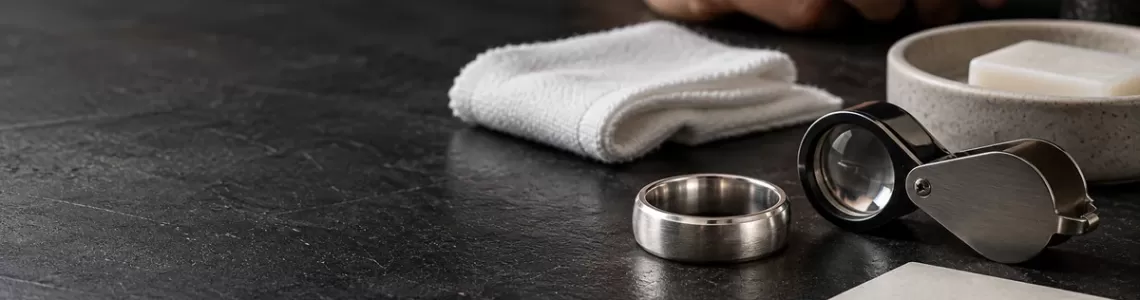
A mark beneath a ring is not a diagnosis. It can come from trapped soap and moisture, friction from a tight or moving band, a metal-transfer or tarnish residue, or allergic contact dermatitis. The safest first step is to remove the ring, gently clean and dry both the ring and skin, and avoid wearing it again while the skin is sore, broken or worsening. Persistent, recurrent or severe symptoms deserve medical assessment rather than a home metal test.
This buyer guide explains how to separate useful clues from guesses. It does not diagnose a rash, identify an alloy from appearance, or prove that a particular ring contains nickel. Instead, it gives you a careful record-and-eliminate process: inspect the pattern, review the seller's material description, remove avoidable irritants, and know when professional advice is the next sensible step.
Start with the pattern, not a conclusion
Contact dermatitis is an umbrella term for skin inflammation caused either by an irritant that damages the skin barrier or by an allergen that triggers an immune reaction. The NHS lists soaps, detergents, solvents and repeated water contact among common irritant causes, while metals including nickel can trigger allergic contact dermatitis. These mechanisms can look similar to a buyer, so a red or itchy ring-shaped area does not reveal the cause by itself.
Look at where and when the problem appears. A narrow band of irritation directly under a ring after frequent handwashing may point toward retained soap, water and friction. The American Academy of Dermatology specifically notes that soap and water can irritate skin beneath a ring and advises removing the ring before washing and drying the hands thoroughly before replacing it. That is a practical clue, not proof: the same location can also be where an allergen contacts the skin.
An allergic reaction may take time to appear. The AAD explains that allergic contact dermatitis can develop hours or days after exposure and that nickel is found in jewelry, including rings. A delayed pattern therefore does not rule a metal allergy in or out. A ring worn for years can also become associated with symptoms later; prior trouble-free wear is useful history, but it is not a guarantee.
Four different observations buyers often combine
1. Itching, burning, swelling or blisters
These are skin symptoms, not metal-identification tests. The AAD lists itch, rash, swelling, heat, dryness, cracking, tenderness, burning, hives and fluid-filled blisters among possible signs of contact dermatitis. Nickel allergy commonly produces an itchy rash where contact occurs, but other allergens and irritants can produce overlapping signs. If the area is painful, hot, draining, increasingly swollen or otherwise concerning, stop the wear experiment and seek health advice.
2. Softened or pale skin beneath the band
A snug ring can hold water against the skin after handwashing, exercise or glove use. Soap, sanitizer, lotion and cleaning residue may remain where evaporation is slow. The useful buyer action is mechanical and reversible: remove the ring, rinse and dry it according to the known material and stone-care limits, let the skin recover, and change one variable at a time. Do not use bleach, abrasive powder or an unknown chemical dip simply because the problem appears beneath metal.
3. Green, gray or dark transfer
Color on the skin is not equivalent to dermatitis. Metal compounds, cosmetics, sweat, household chemicals and surface tarnish can leave transferable residue without producing an immune allergy. Conversely, an allergy can occur without a dramatic color deposit. Photograph the ring and the mark in neutral light, then wash the area gently. Record whether the color wipes away, whether there is itch or pain, and whether the ring surface itself has changed.
Do not infer purity from the color of a mark. The FTC explains that “sterling” and “sterling silver” describe material containing 92.5% pure silver, while silver-plated products have a silver layer over another metal. That composition rule does not tell you the exact remaining alloy, solder, plating history or repair material in a specific finished ring. For a fuller buying distinction, read 925 stamp versus hallmark and whether 925 automatically means nickel-free.
4. A shiny or darkened ring surface
A finish change can be normal wear, polishing, oxidation, tarnish, transferred product or damage to a coating. It still does not diagnose the skin. Compare the current ring with the original listing and your arrival photographs. If the product was described as plated, ask the seller what the coating and base material are and what care instructions apply. Our guide to rhodium-plated silver explains why a coating description matters, while oxidized silver versus tarnish separates intentional finish from unwanted surface change.
What “sterling silver” proves—and what it does not
In U.S. consumer guidance, sterling silver means 92.5% pure silver. It is an alloy rather than chemically pure silver, because pure silver is generally too soft for many jewelry uses. The label is meaningful, but it is not a complete ingredient list for every component of a ring. Solder, plating and decorative parts may require their own accurate description, and repairs can introduce materials that were not present in the original casting.
A “925” mark is supporting information, not independent laboratory verification. Review the seller's written material statement, the exact part to which a claim applies, and any coating disclosure. Keep the product page, receipt and communications. If a listing says only “silver color,” “silver tone” or “silver plated,” do not silently upgrade that wording to sterling silver.
Likewise, “hypoallergenic” is not a universal promise that no person will react. Sensitivity varies, and a buyer cannot determine nickel release from appearance. In the European Union, REACH restriction guidance addresses nickel release from items intended for direct and prolonged skin contact, including finger rings. The restriction is expressed as a release limit, which is different from merely asking whether any nickel atom exists in an alloy. Regulatory compliance and personal tolerance are related but not identical questions.
A conservative seven-step check
Step 1: Remove the ring and preserve evidence
Take the ring off if the skin is irritated. Photograph the ring, the affected area and any surface residue in diffuse daylight or neutral indoor light. Save the original listing, metal description, size, coating claim, care instructions, receipt and seller policy. If the ring recently arrived, the post-delivery ring inspection checklist provides a broader condition record.
Step 2: Note timing and exposures
Write down when symptoms began, how long the ring had been worn, whether the hands were frequently wet, and what touched the area: soap, sanitizer, lotion, gloves, cleaning products, swimming water or workplace chemicals. Record changes in weather, swelling and activity. This history is more useful than repeatedly putting the ring back on to provoke a reaction.
Step 3: Check fit without forcing the band
A ring that is too tight can trap moisture and increase pressure; a ring that spins or slides can add friction. Finger size also changes with temperature and time. Do not resize a ring on the basis of one irritated-day measurement. Let the skin settle and review the ring size chart guide before comparing diameter, circumference and U.S. size.
Step 4: Clean only within known material limits
If the ring has no unknown porous stone, fragile treatment or coating restriction, use the seller's care method and dry it completely. Avoid improvised acids, chlorine bleach, abrasive paste and aggressive polishing. A coating can be thinned by unsuitable cleaning, and trapped cleaner can create a new irritation variable. When material or treatment is unknown, ask before cleaning.
Step 5: Review claims component by component
Separate the band, setting, stone, soldered joins and any coating in your notes. Ask the seller for the written material description that applied at purchase. Do not assume a silver-colored setting, white-metal solder or plated surface has the same composition as a stamped band. If the answer changes the purchase decision, request it in durable written form.
Step 6: Do not rely on destructive or oversimplified tests
Do not scratch, file, acid-test or heat a wearable ring at home. A magnet response, surface color or online photo cannot establish a complete alloy or diagnose an allergy. Consumer nickel spot tests may indicate releasable nickel under the test conditions, but a negative home result is not a medical diagnosis or a complete compositional analysis. For an important dispute, use an appropriately qualified jeweler or testing service; for recurring skin symptoms, use a healthcare professional.
Step 7: Decide the next owner of the problem
A seller can clarify the advertised material, coating, care instructions and return process. A jeweler can inspect construction and discuss material testing or repair limits. A clinician can assess the skin and decide whether testing is appropriate. Mayo Clinic describes patch testing as a tool clinicians may use when allergic contact dermatitis is suspected. These roles should not be collapsed: a jeweler does not diagnose dermatitis, and a skin reaction alone does not prove a misleading jewelry claim.
When to pause wear and seek medical advice
The NHS recommends medical advice for persistent, recurrent or severe contact-dermatitis symptoms, especially when the cause is unclear or treatment is not helping. Mayo Clinic advises prompt professional attention when infection may be present, including warmth, swelling, pus or pain, and emergency care for breathing difficulty. This article cannot assess severity from a photograph.
Until the cause is clearer, avoid repeatedly re-exposing irritated skin simply to test a theory. If a clinician has already diagnosed a specific metal allergy, follow that clinician's avoidance and treatment advice. If not, preserve the exposure history and take the ring or its material documentation to the appointment if requested.
Also resist changing several things at once. Switching soap, polishing the ring, adding a barrier coating and altering wear time on the same day destroys the comparison you need. A short written timeline with one controlled change at a time can help a seller, jeweler or clinician interpret what happened. Stop the process if symptoms return or worsen; observation is never more important than protecting damaged skin.
Buyer questions worth asking before purchase
- Is the ring described as solid sterling silver, plated silver, silver tone or another alloy?
- Does the material statement apply to the entire ring or only the band?
- Is there a plating or intentionally oxidized finish, and what care does it require?
- Can the seller identify the base metal, solder or other components?
- What size and width are supplied, and what is the resizing policy?
- What are the written return conditions if the ring cannot be comfortably worn?
These questions are most useful before a purchase because they turn vague expectations into verifiable records. The online jewelry buying checklist shows how to capture those details without changing a product or creating an order during research.
Frequently asked questions
Does a ring-shaped rash prove nickel allergy?
No. Nickel is a common cause of allergic contact dermatitis, but soap, water, friction, other metals and personal-care products can produce overlapping patterns. A clinician may use history and patch testing when diagnosis is uncertain.
Can sterling silver contain metals other than silver?
Yes. Sterling silver is 92.5% silver, so it is an alloy. The sterling label alone does not provide a complete component-by-component ingredient list for a finished ring.
Does a 925 stamp prove a ring will not cause irritation?
No. A stamp is not a medical guarantee, and irritation can come from moisture, soap, friction, coatings, solder or another component. Evaluate both the product description and the skin symptoms separately.
Why does irritation appear after washing hands?
Water and soap can remain beneath a band, particularly when it is snug. Removing the ring before washing and drying both skin and ring thoroughly removes one avoidable irritant variable.
Is a green or dark mark the same as an allergy?
No. A transferable metal or tarnish residue is an observation about color; allergy is an immune reaction. Either can occur without the other, and neither identifies the full alloy by itself.
Should I coat the inside of a ring with clear nail polish?
A temporary barrier is sometimes discussed for nickel-containing objects, but it can wear, alter appearance and introduce another potential irritant. For valuable or plated jewelry, ask a qualified jeweler and follow medical advice instead of treating a coating hack as a durable solution.
Can I test a ring for nickel at home?
A consumer spot test may provide limited information about nickel release under its test conditions. It does not diagnose allergy, certify every component or replace professional compositional testing.
When should I stop wearing the ring?
Remove it when the skin is irritated, broken, painful, blistering or worsening. Seek medical advice for persistent, recurrent or severe symptoms, signs of infection, or an unclear cause.
References
- American Academy of Dermatology: Contact dermatitis signs and symptoms
- American Academy of Dermatology: Itchy rash could be contact dermatitis
- NHS: Contact dermatitis
- European Chemicals Agency: Nickel restriction and prolonged skin contact
- U.S. Federal Trade Commission: Buying platinum, gold and silver jewelry
- Mayo Clinic: Contact dermatitis diagnosis and treatment
Evidence boundary: This guide supports buyer documentation and conservative next steps. It does not diagnose a skin condition, identify a metal or coating, prescribe treatment, certify regulatory compliance, or determine a return or refund entitlement.
Leave a Comment