
Rhodium-Plated Silver Jewelry: Coating, Hallmarks and Buyer Checks
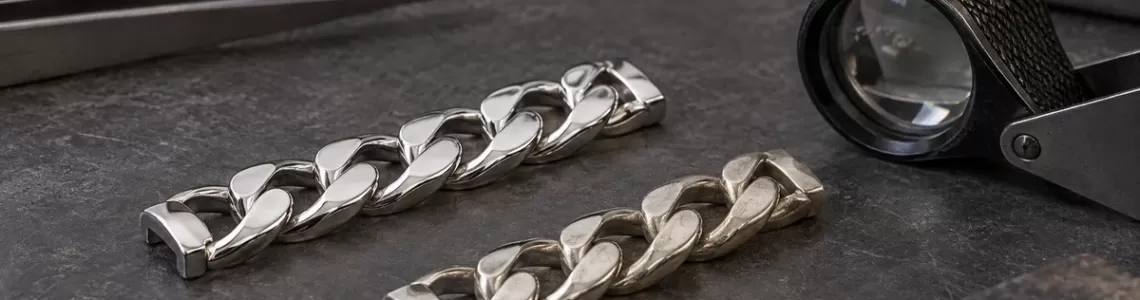
Quick answer: rhodium-plated silver jewelry has a thin rhodium surface over a silver-containing component, but the bright white finish does not prove what is underneath. A careful buyer checks two separate claims: the base-metal description, such as 925 sterling silver, and the disclosed surface treatment, such as rhodium plating. The finish can change color, reflectivity, tarnish behavior and maintenance needs, while the underlying alloy, construction, seller records and return terms still control the material claim.
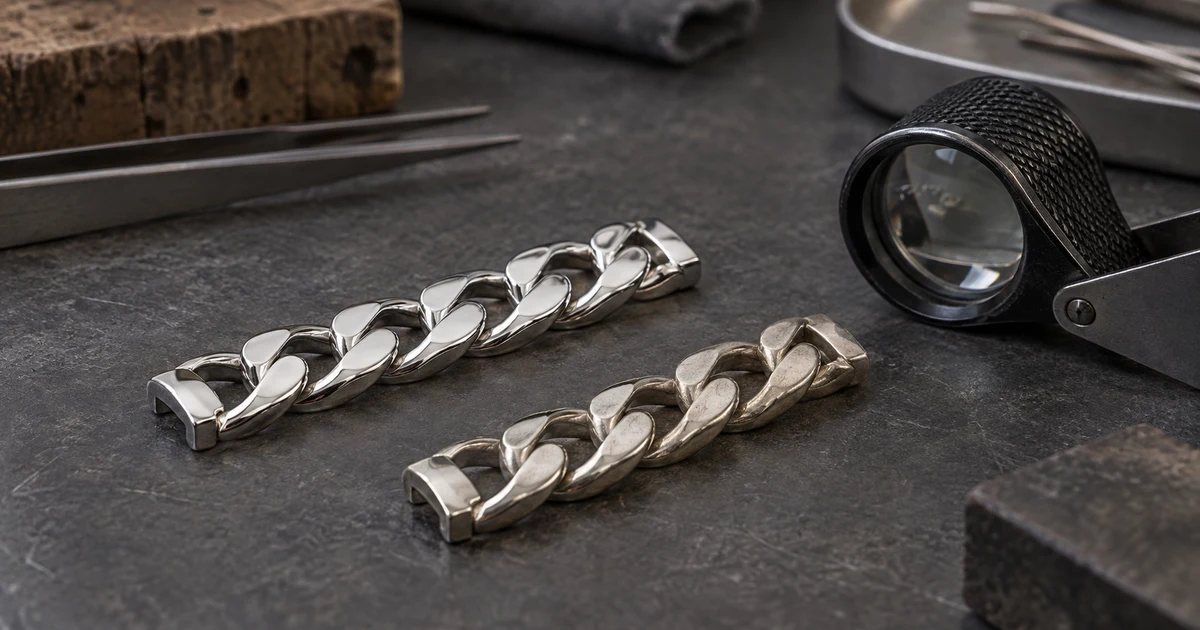
Rhodium is a platinum-group metal used as a surface finish on some jewelry. A rhodium layer can make silver-colored jewelry look bright and cool-toned, but it is not a laboratory report for the substrate. A plated piece may be sterling silver, another precious-metal alloy, or a base-metal construction depending on the actual listing. The practical task is therefore not “Does it look white?” but “What does the seller say the item is made from, what coating is disclosed, and which evidence supports each statement?”
This guide is about claim reading, wear patterns, care boundaries and pre-purchase questions. It does not authenticate a specific bracelet, estimate plating thickness from a photograph, guarantee a coating lifetime, or state that every silver item sold by sunMYLOVE is rhodium plated. Individual product pages control their own specifications. If a listing does not name rhodium, do not infer it from brightness alone.
Rhodium plating and sterling silver are different layers of the claim
The U.S. Federal Trade Commission’s consumer guidance explains that the words “silver,” “sterling” and “sterling silver” describe products containing 92.5 percent pure silver, and that a 925 mark refers to 925 parts per thousand silver. That is a composition statement about the silver alloy. Rhodium plating is a surface application. One phrase does not replace the other.
The distinction matters because a listing can accurately say “rhodium-plated sterling silver” only when both parts are supportable: the item or identified component is sterling silver, and a rhodium layer is present on the surface. A listing that says only “rhodium plated” leaves the substrate unanswered. A listing that says only “925 sterling silver” does not tell you whether the surface is bare silver, intentionally oxidized, lacquered, plated or otherwise finished.
Current U.S. Jewelry Guides are unusually direct on this point. Section 23.7 says it is unfair or deceptive to fail to disclose a rhodium surface layer on a product marked or described as precious metal. Section 23.8 separately addresses products containing more than one precious metal and warns against misrepresenting their relative quantities. For a buyer, those rules support a simple reading habit: separate the main material from the surface layer and do not collapse them into one vague “silver color” claim.
- 925 sterling silver
- A fineness description for a silver alloy containing 925 parts silver per thousand. It does not, by itself, identify every clasp spring, cord, stone, solder, finish or coating.
- Rhodium plated
- A surface-treatment description. It says nothing conclusive about the substrate unless the seller names that substrate separately.
- Silver plated
- A silver layer over another material. It is not the same construction as rhodium over sterling silver, even if both can look bright in photographs.
- Silver tone
- A color description, not a precious-metal composition claim.
- Hallmark or quality mark
- A mark that may communicate fineness or responsibility under a particular marking system. Its meaning depends on the mark, jurisdiction and accompanying sponsor or maker information.
What rhodium can change—and what it cannot prove
A rhodium surface is often selected for a bright, reflective white appearance. U.S. Jewelry Guides treat rhodium as a surface layer that must be disclosed separately from the precious-metal description. The coating also separates the immediate surface from the underlying silver while it remains intact. Those are useful appearance and maintenance facts, not proof that the underlying item has a particular purity, weight or construction.
Rhodium is one of the platinum-group metals identified by the U.S. Geological Survey. That classification does not mean a thin rhodium coating turns the whole bracelet into solid platinum-group-metal jewelry. Value comparisons must keep quantity and construction in view. A microscopic or very thin surface layer and a solid precious-metal object are materially different products, even when the surface metal itself is precious.
A coating also does not guarantee that a bracelet is hypoallergenic, corrosion-proof, scratch-proof or maintenance-free. The complete object may include solder, clasp springs, elastic, cord, stones, pearls, adhesives or exposed areas of another metal. Skin response is individual, and no surface should be described as permanent merely because it looks durable when new. Ask for precise construction rather than treating a broad comfort or durability phrase as a substitute.
Color is weak evidence. Studio lighting, white balance, display settings and image editing can make bare silver, rhodium, white gold, platinum, stainless steel and silver-colored alloys look similar online. If color consistency matters, compare several photographs, read the written specifications and ask whether the coating applies to the entire item or only selected components.
How to read marks without overclaiming
A visible “925” can be relevant evidence, but a photograph of a tiny stamp is not an assay. The FTC advises buyers to understand quality marks and to look for the name or U.S. registered trademark of the company standing behind a mark. UK government hallmarking guidance uses a different framework in which component marks can identify fineness, the sponsor or maker and the assay office. Do not merge those systems or assume that every item must carry the same marks worldwide.
More importantly, a fineness mark generally concerns the metal represented by that mark. It does not automatically disclose a transparent lacquer, rhodium layer, intentional oxidation or another surface treatment. If the listing says “925” but photographs show an especially bright white finish, the correct response is not to guess. Check the material line, finish line, care notes and seller response for a direct plating statement.
Marks can also be partial evidence on a mixed-material bracelet. A 925 charm does not prove that every spacer, jump ring, clasp or bead is sterling silver. When comparing pieces in the sterling silver bracelet collection, read the exact component description on each product page rather than transferring one product’s claim to the entire category.
Seven buyer checks before purchase
- Name the substrate. Look for an explicit phrase such as sterling silver, fine silver, brass, copper or another alloy. “Rhodium plated” alone is incomplete because it describes only the surface.
- Name the coated components. Ask whether the coating covers the whole bracelet, selected silver beads, a charm, a clasp or another part. Mixed-material pieces often require component-level reading.
- Check consistency. The title, specification table, description, invoice and care instructions should not conflict. Save the listing if material and finish matter to your decision.
- Ask about maintenance. Determine whether ordinary wiping is recommended, whether polishing compounds are restricted, and whether professional replating is available or merely possible in theory.
- Check wear points. Look closely at clasp contact zones, link edges, bead holes and high-friction surfaces. Photos cannot predict lifetime, but construction tells you where a surface is likely to receive the most rubbing.
- Separate coverage from care. A warranty, paid service plan and optional replating service are different promises. Read who performs the work, what costs remain, and whether ordinary surface wear is excluded.
- Keep a return path. Verify delivery and return terms before testing, polishing or altering the item. Destructive home tests can damage a returnable bracelet and still fail to identify every layer.
These checks apply whether you are considering an all-metal bracelet or a mixed design such as the 925 sterling silver red-string bracelet or the freshwater pearl and 925 sterling silver bracelet. The links identify current catalog examples; they do not add a rhodium claim that the product page itself does not make.
Wear, cleaning and replating boundaries
No responsible buyer guide should assign one universal life span to rhodium plating. Wear depends on coating process and thickness, surface preparation, bracelet geometry, contact frequency, friction, cosmetics, cleaning methods and the wearer’s routine. A pendant may receive less abrasion than a bracelet link or clasp. Even within one bracelet, edges and contact points can change sooner than recessed surfaces.
When the finish changes, do not assume the underlying piece is fake. A coating can wear while the represented substrate remains the same. Conversely, a bright intact coating cannot prove that the substrate is sterling. The correct interpretation still comes from the supported product description, marks, seller records and, when warranted, qualified testing.
Care should follow the complete item and the seller’s instructions. The Canadian Conservation Institute’s silver-care guidance illustrates why aggressive polishing is not neutral: polishing removes material, and plated surfaces are particularly vulnerable. For rhodium-plated jewelry, that principle is important because abrasion may reduce the surface layer. Use the mildest compatible method, avoid improvising with unknown dips or abrasive pastes, and obtain professional assessment when construction or finish is uncertain.
Mixed pieces need the gentlest component’s method. Pearls, cord, wood, soft stones, adhesives and intentionally oxidized recesses may rule out a method that plain uncoated metal could tolerate. The site’s ultrasonic-cleaning compatibility checklist and mixed-material bracelet cleaning guide provide broader decision frameworks without declaring any individual product safe for a machine or chemical.
Replating is a service decision, not evidence that the original coating was defective. Before approving work, ask what will be cleaned or polished away, whether stones or cord must be removed, whether the quoted work covers the full bracelet, and how the finish may differ from untouched components. Preserve photographs and written estimates. If coverage is involved, compare the service with the jewelry warranty versus service-plan checklist before authorizing paid work.
How to compare real listings without inventing a coating claim
Start with what a page actually states. The SUERTE fine-silver bead bracelet, a 925 silver cord bracelet and a pearl-and-silver bracelet describe different constructions. Their live titles, specifications and descriptions control. A guide about rhodium does not convert “fine silver” into “rhodium-plated fine silver,” and it does not mean every bright product photograph shows a plated surface.
For the broader base-metal distinction, use the solid sterling silver versus silver-plated bracelet guide. That page asks whether silver is the main alloy or a layer over another material. The present guide asks a different question: whether a rhodium surface has been applied over a precious-metal item and how that separate layer should be disclosed and maintained.
If the delivered item appears different from the written listing, avoid immediate scraping, filing, acid testing or heavy polishing. Photograph the item, packaging, marks and wear area in neutral light; preserve the order record; and contact the seller using specific language. “The page states 925 sterling silver with rhodium plating, but the received item’s finish description is missing from the invoice” is more useful than a conclusion based only on color.
Frequently asked questions
Does rhodium plating mean the jewelry is sterling silver?
No. Rhodium describes a surface layer. The substrate must be stated separately. It may be sterling silver, another precious-metal alloy or a base metal depending on the actual product.
Does a 925 stamp prove the rhodium layer?
No. A 925 mark is associated with silver fineness, not automatic proof of a rhodium coating. Look for a separate finish disclosure.
Can I tell rhodium from silver in a photograph?
Not reliably. Lighting, white balance, polishing and display settings can make several white metals and finishes look alike. Written specifications are more useful than color alone.
Will rhodium-plated silver never tarnish?
No permanent result should be assumed. An intact coating changes the immediate surface, but wear, exposed areas, construction and environment still matter. Ask for product-specific care guidance.
Can I use a silver polishing cloth on rhodium-plated jewelry?
Do not assume that an abrasive or treated silver cloth is appropriate for a plated surface. Follow the seller’s instructions and use the mildest compatible method; unnecessary polishing can remove surface material.
Is replating covered by a jewelry warranty?
Coverage varies. Ordinary finish wear may be excluded, while a paid plan may have separate service terms or costs. Read the written warranty or plan rather than assuming.
Is rhodium-plated jewelry automatically hypoallergenic?
No universal claim follows from the coating alone. The complete item, exposed areas, underlying metals, wear and individual sensitivity all matter.
References
- Electronic Code of Federal Regulations, 16 CFR Part 23, Jewelry Guides — silver terminology, rhodium surface-layer disclosure and multi-metal descriptions.
- U.S. Federal Trade Commission, Buying Platinum, Gold, and Silver Jewelry — precious-metal terms, 925 silver and seller/return checks.
- U.S. Federal Trade Commission, Jewelry Guides topic page — current regulatory resources and guidance context.
- U.S. Federal Trade Commission, 2018 Jewelry Guides statement of basis and purpose — regulatory record for the final Jewelry Guides revision.
- UK Government, Hallmarking guidance notes — UK hallmark components, sponsor marks and assay-office context.
- London Assay Office, What Is a Hallmark? — practical explanation of the UK hallmark framework.
- U.S. Geological Survey, Platinum-Group Metals Statistics and Information — rhodium’s place among platinum-group metals.
- Canadian Conservation Institute, Silver: Care and Tarnish Removal — conservative silver-care and polishing context.
Evidence boundary: these sources support general material terminology, advertising disclosure and conservative care principles. They do not assay a sunMYLOVE product, establish a universal coating thickness or lifetime, or prove that any item is rhodium plated unless its own product information says so.
Leave a Comment