
Alexandrite Bracelet Buyer Checks: Color Change, Synthetic Stones and Care
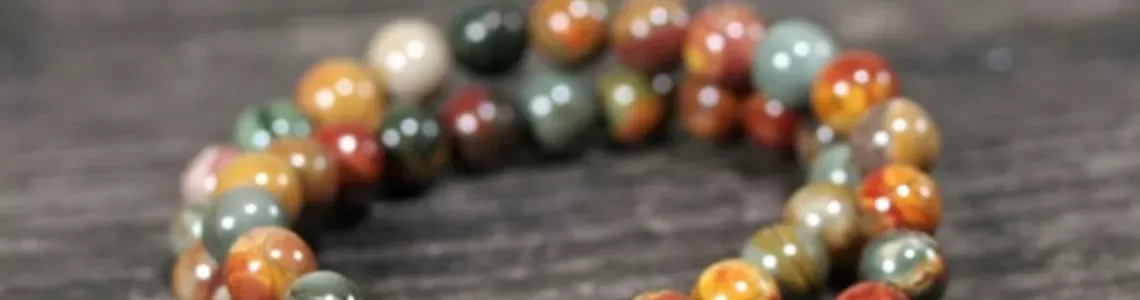
Answer first: An alexandrite bracelet should be judged first by what the seller actually claims, then by how the beads behave under two documented light sources. Natural alexandrite is the color-change variety of chrysoberyl, not simply any bead that shifts from purple to green. Laboratory-grown alexandrite can have essentially the same chemical, physical and optical properties as mined alexandrite, while color-change synthetic sapphire, synthetic spinel, glass and other materials may imitate its appearance. A photograph can show design and an apparent color response, but it cannot prove natural origin, treatment status or identity. For a purchase where those claims materially affect price, ask for a precise written description and an independent gemological report matched to the item.
This research-based alexandrite bracelet guide is for online buyers comparing bead identity, color change, durability, construction and care. It does not authenticate any sunMYLOVE product, assign a laboratory grade, infer geographic origin from color, or promise spiritual or medical effects.
Research question, scope and evidence boundary
The practical question is: what can a buyer safely conclude from an alexandrite bracelet listing, and what requires laboratory evidence? The answer separates five issues that sellers sometimes blend together: mineral identity, natural versus laboratory origin, imitation status, treatment, and visible quality. These are different claims. A bead may be laboratory-grown alexandrite rather than mined alexandrite; it may instead be color-change synthetic sapphire that imitates alexandrite; or it may be another material sold with only a style name.
The evidence here comes primarily from the Gemological Institute of America (GIA), the U.S. Geological Survey (USGS), CIBJO and Gem-A. It supports definitions, disclosure questions, color-change observation, durability and conservative care. It does not establish what any untested bead is made from. The live sunMYLOVE Dzi Bead, Ebony and Alexandrite Bracelet is linked as a real catalog example; its current product-page wording remains the product claim, not a laboratory conclusion added by this article.
Definitions that prevent the most expensive mistake
Alexandrite is the color-change variety of chrysoberyl. GIA lists chrysoberyl chemistry as BeAl2O4 and explains that fine alexandrite commonly appears green to bluish green in daylight-type illumination and red to purplish red under incandescent light. USGS likewise identifies alexandrite as chrysoberyl and records the red-in-incandescent, green-in-daylight distinction. Read the GIA alexandrite description and the USGS mineral gemstone reference.
Laboratory-grown or synthetic alexandrite is man-made alexandrite with essentially the same defining chemical, physical and optical properties as the mined material. GIA notes that alexandrite has been synthesized by several growth methods, including flux, Czochralski crystal pulling and floating zone methods. “Synthetic” therefore does not mean plastic or glass; it describes laboratory origin.
Imitation or simulant means a different material used to resemble alexandrite. GIA specifically notes that color-change synthetic corundum, and less commonly color-change synthetic spinel, can imitate alexandrite. A seller should not call such a material laboratory-grown alexandrite merely because it changes color. See GIA’s introduction to synthetic gem materials.
Color change is a change in apparent color under light sources with different spectral energy distributions. It is not the same as screen editing, camera white balance or merely turning the bead. Pleochroism is direction-dependent color seen within an anisotropic crystal. GIA explains that alexandrite can be pleochroic, but its celebrated light-source color change is a different phenomenon.
Alexandrite bracelet claims at a glance
| Listing term | What it should mean | What it does not prove | Best buyer check |
|---|---|---|---|
| Natural or mined alexandrite | Color-change chrysoberyl formed in nature | Geographic origin, treatment status, quality or value | For a material premium, request an independent identification report matched to the item |
| Laboratory-grown alexandrite | Man-made alexandrite with the named material’s defining properties | Natural origin or the same rarity-based value | Require the laboratory origin to be clear beside the gem name |
| Alexandrite-effect sapphire | Usually color-change sapphire or synthetic sapphire used for an alexandrite-like effect | Alexandrite identity | Treat “sapphire” as the material noun, not a hidden synonym for alexandrite |
| Simulated or imitation alexandrite | A different material resembling alexandrite | Chrysoberyl composition | Ask what the underlying material actually is |
| Alexandrite color | A color or design description | Any mineral identity | Do not upgrade a color adjective into a gemstone claim |
| Color-changing bead | An observed optical response under stated lighting | Natural origin, alexandrite identity or treatment status | Ask for identity, origin category and lighting documentation separately |
Why color-change photos are useful but not proof
A two-photo comparison can document how a bracelet looked under two conditions, but only if the conditions are described. “Daylight” may mean direct sun, shade, a daylight LED or a camera preset. “Warm light” may mean tungsten, candlelight or a warm LED, each with a different spectrum. Automatic white balance can make the camera neutralize the very shift a seller is trying to show. Screen calibration, exposure, background and reflections also alter the result.
A more useful listing shows the same bracelet position and framing under a daylight-equivalent source and a warm incandescent-type source, identifies the approximate lighting, avoids color filters, and states that screens vary. Video can show the transition, but it still cannot establish mineral identity. This is a practical documentation framework, not a gemological test standard.
GIA’s alexandrite buyer’s guide says color change is the most important quality factor and considers both the extent of the change and the quality of the colors. The guide also warns that a low-priced stone with a strong red-green change is likely to be synthetic or a simulant. “Likely” is a risk signal, not an authentication result: price and photographs alone cannot identify a gem.
Natural, laboratory-grown and imitation: three separate decisions
Begin with a three-line description:
- Material identity: chrysoberyl/alexandrite, sapphire/corundum, spinel, glass or another named material.
- Origin category: mined/natural, laboratory-grown, or unknown.
- Treatment: known treatment, no treatment detected on a specified report, or unknown.
If a seller supplies only “genuine alexandrite,” the description is incomplete for a price-sensitive decision. “Genuine” does not clearly resolve natural versus laboratory origin, and it does not exclude a confusing trade name. If the description says “created alexandrite,” ask whether that means laboratory-grown chrysoberyl or merely an alexandrite-effect imitation. Clear ordinary language is more useful than prestige adjectives.
The CIBJO alexandrite and chrysoberyl reference directs readers to its gemstone nomenclature standards for artificial products, imitations and treatments. Gem-A’s retail review of alexandrite likewise distinguishes flux-grown and Czochralski-grown synthetic alexandrite from prevalent color-change synthetic sapphire simulants. These sources support careful terminology; they do not identify a bracelet from its listing photo.
What an independent report can and cannot establish
For a significant purchase, GIA says a colored-stone report can describe measurements, shape, cutting style and color, determine natural versus laboratory-grown status, and identify detectable treatments. When possible and requested, an origin opinion may also be available. A report should be matched to the actual item by report number, measurements, images and identifying details; a generic sample report or a report for a different stone proves nothing about the bracelet in front of you.
Laboratory identification uses multiple observations and instruments rather than one home trick. GIA research on colored-stone analysis describes microscopy, spectroscopy, trace-element methods and other testing selected for the question. Even a valid report has scope: it reports findings for the submitted item at the time of examination. It does not guarantee future durability, craftsmanship, cord life, fit or resale value.
Do not scratch, burn, heat, chemically wipe or deliberately fracture a bead. A destructive home test can damage the bracelet while still failing to separate natural alexandrite, laboratory-grown alexandrite and a convincing simulant. A phone app, magnet, flashlight or “cool touch” sensation is not a substitute for laboratory identification.
Color, clarity, cut and size: a buyer’s quality framework
After the identity claim is clear, evaluate appearance. GIA places color change first: compare the strength and completeness of the change, the attractiveness of both color states and whether large dull or brown areas remain. Avoid reducing quality to a claimed percentage unless the seller explains how it was measured; color-change estimates can vary with illumination, observer and viewing geometry.
Clarity matters, but inclusions are not automatically proof of natural origin and a perfectly clean appearance is not proof of laboratory growth. Cut affects brightness, apparent color and how strongly the change is presented. In beads, also inspect drill holes, chips, flat spots, polish and consistency. Size should be stated numerically. Natural alexandrite becomes dramatically rarer in larger fine-quality sizes, which is one reason an inexpensive strand of large, strongly changing “natural alexandrite” beads deserves proportionate documentation.
Matching is a design choice. A mixed-material bracelet can intentionally combine color, grain and pattern. The current sunMYLOVE piece combines Dzi-style, ebony and alexandrite-labelled beads, so the materials should be evaluated separately. For the patterned focal element, use the Dzi-style bead buyer checks. For the wood, see the ebony bracelet material and care guide.
Durability: hardness is not the whole bracelet
GIA and USGS list alexandrite/chrysoberyl at 8.5 on the Mohs hardness scale. This indicates strong resistance to scratching compared with many common jewelry stones, but hardness is not impact resistance. GIA describes alexandrite as having excellent toughness and no cleavage, making it suitable for daily-wear jewelry. A polished bead can still chip at a drill hole, abrade against harder materials, or be damaged by a sharp impact on tile or metal.
More importantly, the bracelet is a system. Cord, elastic, knot, spacers, bead-hole finish, charms and fit can fail before the gemstone surface. Large or heavy beads can place more load on elastic. Rough drill holes can cut cord. Tight sizing keeps elastic under continuous tension. Review the hardness versus toughness guide and measure with the beaded bracelet wrist guide before choosing a size.
Care for an alexandrite bracelet
GIA’s alexandrite care guide says warm soapy water is always safe for alexandrite and that ultrasonic and steam cleaning are usually safe. It adds an important exception: fracture-filled material should be cleaned only with warm, soapy water.
For a mixed-material beaded bracelet, choose the needs of the most vulnerable component. Ebony, patterned beads, coatings, adhesives and elastic may not tolerate the same process as a loose alexandrite. Therefore, unless every component and treatment is known, the conservative whole-bracelet routine is:
- Wipe loose dust with a clean, soft cloth.
- Use a barely damp cloth with a small amount of mild soap only when the product instructions permit it.
- Do not soak the strand or force water into bead holes and knots.
- Wipe away soap with a second lightly damp cloth.
- Dry immediately with a soft lint-free cloth, then air-dry flat away from heat and sunlight.
- Store separately so harder jewelry, metal edges and abrasive dust cannot rub the beads.
Do not assume an ultrasonic cleaner is safe for the assembled bracelet just because it is usually safe for untreated alexandrite. Do not use steam on elastic or unidentified coatings. Remove the bracelet before swimming, harsh cleaning, heavy impact work or applying perfume and household chemicals.
Seven buyer checks before paying
- Read the material noun. Does the listing say alexandrite/chrysoberyl, laboratory-grown alexandrite, color-change sapphire, imitation alexandrite or only “alexandrite color”?
- Resolve origin category. Ask whether the claimed alexandrite is mined, laboratory-grown or unknown.
- Ask about treatment. Request known treatment and special-care disclosure. Do not treat silence as “untreated.”
- Check lighting evidence. Look for the same item under two described light sources without obvious filters.
- Match evidence to price. For a substantial natural-origin premium, request an independent report tied to the actual item.
- Inspect construction. Check bead diameter, drill holes, cord, closure, spacers and fit range rather than judging the stones alone.
- Protect the remedy. Save the description and selected variant, then review delivery information and the returns and refunds policy before ordering.
Common mistakes and counterevidence
- “It changes color, so it is natural alexandrite.” False. Laboratory-grown alexandrite and several simulants can change color.
- “Synthetic means fake glass.” False. Synthetic alexandrite is laboratory-grown alexandrite; imitation glass or synthetic sapphire is a different category.
- “A strong change proves high value.” Incomplete. Identity, origin, both color states, clarity, cut, size and documentation matter.
- “Inclusions prove natural origin.” Unsafe. Inclusions require trained interpretation, and laboratory-grown material can contain growth features.
- “A certificate image proves every bead in the bracelet.” Only if the report clearly covers and matches the submitted bracelet or specified stones.
- “Mohs 8.5 means unbreakable.” Hardness addresses scratching, not every form of impact, chipping or cord failure.
- “Alexandrite improves health or luck.” There is not enough reliable clinical evidence that wearing alexandrite treats disease, pain, circulation, anxiety, sleep, immunity or any other health condition. Personal symbolism is preference, not medical fact.
Frequently asked questions
What is alexandrite made of?
Alexandrite is the color-change variety of chrysoberyl, with the composition BeAl2O4. The variety name depends on its characteristic color-change behavior, not merely a purple or green body color.
Does every alexandrite change from green to red?
The classic description is green or bluish green in daylight-type illumination and red to purplish red in incandescent light, but actual stones vary in hue, saturation and completeness of change. Lighting and observation conditions also matter.
Is laboratory-grown alexandrite real alexandrite?
It is alexandrite produced in a laboratory rather than mined. It should be disclosed clearly as laboratory-grown or laboratory-created. It is not the same as an imitation made from sapphire, spinel or glass.
What is “alexandrite sapphire”?
GIA says the term generally refers to color-change sapphire, often laboratory-grown, manufactured to resemble alexandrite’s effect. The material is sapphire/corundum, not chrysoberyl alexandrite.
Can photos prove an alexandrite bracelet is natural?
No. Photos can document design and apparent color under stated conditions, but camera processing and lighting affect color. Natural versus laboratory-grown identity and simulant separation can require gemological testing.
Is alexandrite durable enough for a bracelet?
Alexandrite is hard and tough, but beads can still chip at holes or under impact. Cord, elastic, spacers and fit may determine the service life of the complete bracelet.
Can I use an ultrasonic cleaner?
GIA says ultrasonic cleaning is usually safe for alexandrite, but fracture-filled stones should receive only warm soapy water. For a mixed-material bracelet, avoid ultrasound unless every bead, treatment, adhesive and cord is known to be compatible.
Do alexandrite bracelets have proven health benefits?
No reliable clinical evidence shows that wearing alexandrite treats or prevents disease or improves circulation, sleep, immunity, pain or anxiety. Symbolic meaning may be personally important, but it is not a medical effect.
Method and evidence scope
This guide compared the current product catalog, existing sunMYLOVE articles, the site’s keyword-to-URL map, live search intent and eight directly relevant institutional sources. Candidate topics were rejected when they overlapped current obsidian, volcanic stone, jade, agate, Dzi, silver, sizing or pearl guides. Search demand for the exact product keyword is recorded in the existing catalog map as US 720 / KD 9 from a prior validated commercial dataset dated 28 July 2026; current GSC demand for this run is reported separately and is not replaced by that estimate.
The evidence proves the mineral definition, recognized synthetic and imitation categories, the importance of color change, typical durability and conservative cleaning guidance. The photography checklist and whole-bracelet care method are reasonable practical inferences from those facts and mixed-material risk. The evidence cannot authenticate an untested bracelet, establish geographic origin, guarantee color appearance on every screen, predict personal comfort or support health claims.
References and evidence scope
- Gemological Institute of America, Alexandrite Buyer’s Guide.
- Gemological Institute of America, Alexandrite Description and Color Change.
- Gemological Institute of America, Alexandrite Care and Cleaning Guide.
- Gemological Institute of America, Introduction to Synthetic Gem Materials.
- U.S. Geological Survey, Natural Mineral Gemstones.
- CIBJO, Alexandrite and Chrysoberyl Retail Reference Guide.
- Gem-A, Retail Focus: Alexandrite.
- Gems & Gemology, Pleochroism and Color Change in Faceted Alexandrite.
Reviewed: 30 August 2026. Recheck the exact listing, report, lighting disclosure, materials, size and return terms before ordering.
sunMYLOVE editorial note: This article separates catalog wording from laboratory evidence. It does not add an origin, treatment, certification or natural-gem claim to any product beyond the product page’s own current wording. Browse the men’s beaded bracelet collection and compare each item’s actual specifications before buying.
Leave a Comment