
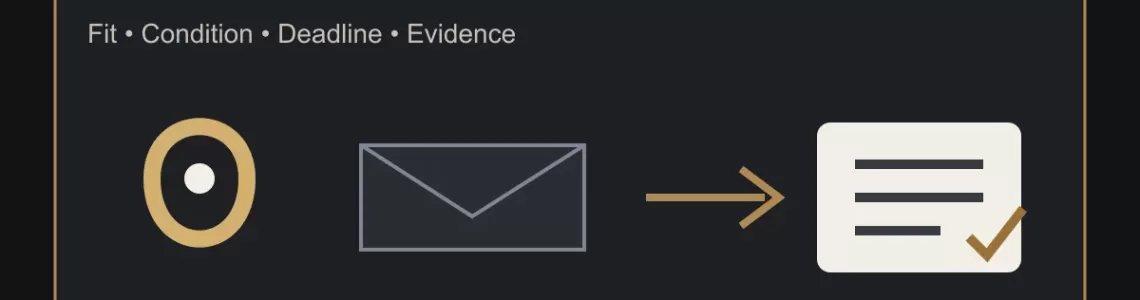
Answer first: to return jewelry bought online, stop wearing or altering it, preserve every component, photograph the item and packaging, compare the problem with the seller’s current policy, and contact the seller before the shortest stated deadline. Describe the issue precisely: wrong size, change of mind, damage, missing component, item different from the description, or non-delivery. Those situations are not interchangeable, and neither a store policy nor one country’s consumer rule creates a universal return right.
Research question and scope
This guide asks: what should an online jewelry buyer do when a bracelet, necklace or other piece may need to go back? It covers evidence preservation, fit checks, condition, custom-order limits, shipping and escalation boundaries. It is a practical buying-risk guide for U.S. and international readers, not legal advice. Rights and deadlines depend on the buyer’s location, the seller’s location, the contract, the payment method, the reason for the return and applicable law.
The central principle is simple: preserve options before trying to solve the product. Do not polish tarnish, resize a bracelet, cut a tag, bend a cuff, remove a protective film, replace packaging or use chemicals until the seller confirms what is allowed. A well-intentioned “fix” can change the item’s condition and make the original problem harder to document.
Definitions that prevent return mistakes
- Return
- Sending an item back under the seller’s policy, a contractual remedy or an applicable legal right.
- Exchange
- Replacing an item, often for another size or product. An exchange may have different timing, stock and shipping terms from a refund.
- Change of mind
- The delivered item matches the order, but the buyer no longer wants it. This is different from non-delivery, damage or a material mismatch.
- Not as described
- A specific, documentable difference between what was promised and what arrived, such as the wrong model, quantity or stated material. Personal dislike alone is not the same claim.
- Custom or personalized item
- An item made to the buyer’s specification or clearly personalized, such as engraving or a made-to-measure modification. Some jurisdictions and policies treat these differently.
- Condition evidence
- Time-stamped photographs, video, packaging, labels, measurements and written communications that show what arrived and what the buyer did next.
Start with a six-case return triage
Choose the closest factual case before contacting the seller. Clear classification reduces back-and-forth and helps prevent an accidental overstatement.
- Wrong fit
- First evidence: wrist measurement, listing size method and item measurement. Stop wearing it and ask whether exchange or return applies. Avoid stretching, bending or resizing.
- Change of mind
- First evidence: order confirmation and current policy. Check the deadline, allowed condition and return-shipping terms. Avoid assuming every country or seller gives the same window.
- Damaged on arrival
- First evidence: outer package, inner packaging and close-up images. Report promptly and keep all packaging. Avoid repairing, polishing or discarding the box.
- Different from description
- First evidence: saved listing, order details and side-by-side facts. Identify the exact mismatch in neutral language. Avoid relying only on screen color or vague impressions.
- Missing component
- First evidence: unboxing record, packing list and item count. List what was expected and what was received. Avoid mixing the order with other jewelry before documenting it.
- Not delivered
- First evidence: promised date, tracking and seller messages. Contact the seller and preserve payment deadlines. Avoid waiting until a dispute deadline expires.
For sunMYLOVE purchases, read the live returns and refunds page rather than relying on a screenshot from an unrelated seller or an old search result. Delivery timing and shipping context belong on the separate delivery information page. A policy explains the seller’s stated process; it should not be rewritten by a blog article.
Wrong fit: prove the measurement before changing the item
A bracelet can feel wrong even when the ordered label matches. The listing may report total length, inner circumference, a wrist range or a general size name. Bead thickness, rigid construction and closure geometry can change usable space. Measure the wrist at the intended wearing position, then measure the item using the seller’s stated method. Do not compare a wrist circumference directly with an outside bracelet length as if they were identical quantities.
The wrist measurement guide for beaded bracelets explains how to record the body measurement without adding allowance twice. When reporting a fit problem, give the measured wrist, the selected size, the product’s stated measurement method and the observed issue. “Too tight at a 17 cm wrist when the listing states X” is more useful than “doesn’t fit.”
Different construction creates different return risks. A stretch bracelet from the beaded bracelets category may need to pass over the hand. A rigid item from the copper bracelet category may depend on internal dimensions and opening geometry. A linked bracelet from the sterling silver bracelets category may depend on clasp position and usable length. These category examples do not guarantee that every item shares one construction or return rule; verify the individual listing.
Condition: document before cleaning or testing
Jewelry changes through contact. Skin oils, fragrance, water, polish, metal cleaners, ultrasonic cleaning, bending and repeated wear can alter appearance or geometry. If the item may be returned, handle it only as much as needed to inspect it safely. Work over a clean, soft surface, wash and dry hands, and keep small parts together.
Create a neutral evidence set:
- Photograph the unopened or newly opened outer package, including visible damage.
- Photograph the inner packaging, labels, tags and every included component.
- Take one full-item image in diffuse daylight or neutral indoor light.
- Take close-ups of the specific problem from more than one angle.
- Include a ruler only when scale matters, without forcing or stretching the item.
- Save the order confirmation, product page, selected option and seller messages.
- Write a short timeline: delivery time, inspection time and first contact with the seller.
Photographs can show visible condition; they cannot prove every material, treatment, internal defect or cause. Color also varies with lighting, camera processing and display settings. The guide to jewelry color differences online explains why a screen comparison alone may be weak evidence. Use objective listing facts where possible: selected color name, dimensions, count, model, hallmark wording and disclosed materials.
Read the policy as a checklist, not a headline
The U.S. Federal Trade Commission’s online shopping guidance tells buyers to check who pays return shipping, how many days are available and whether restocking fees apply. It also recommends keeping the company name, order details, price, return policy, shipping promise and communications. Those records are useful because “returns accepted” does not answer every operational question.
Before sending anything, identify:
- the event that starts the deadline: order date, shipment date, delivery date or authorization date;
- whether the window uses calendar days or business days;
- whether an authorization number or contact step is required;
- the allowed condition: unworn, unaltered, tags attached, original packaging or another standard;
- whether earrings, resized pieces, engraved items, clearance items or custom orders are excluded;
- who pays outbound and return shipping;
- whether the outcome is refund, store credit, repair or exchange;
- whether fees or non-refundable charges are disclosed;
- the required return address and trackable shipping method.
Save the applicable policy before the deadline, but do not treat a screenshot as permission to ignore instructions printed in the return authorization. Ask the seller when wording is ambiguous. The earlier bracelet gift pre-purchase checklist covers these questions before purchase; this guide applies them after a problem appears.
Custom, engraved and resized jewelry needs a separate decision
Personalization can change return eligibility because the item may be difficult to resell and because some legal frameworks create exceptions. The European Commission’s Your Europe return guidance describes a 14-day withdrawal period for many distance purchases in the EU, while listing goods made to order or clearly personalized among the exceptions. It also notes that return-postage responsibility can depend on what the seller disclosed.
That EU rule is not a worldwide promise, and it does not decide whether a particular bracelet counts as personalized. A standard size selected from a menu, a made-to-measure size, engraving and a post-purchase alteration may be treated differently. Ask before production begins if cancellation matters. After delivery, state exactly what was customized and why the item is being questioned. Do not remove engraving, cut a strand or ask a third party to resize the piece before the seller responds.
The European Commission’s contract-information guidance also emphasizes clear product, price, delivery and trader information and written confirmation for distance purchases. The practical lesson for an international buyer is to preserve the confirmation and the version of the specification that was accepted.
Delivery problems are not ordinary change-of-mind returns
If a package has not arrived, there is no item to repackage. Keep the promised shipping date, carrier tracking, address confirmation and seller messages. The FTC’s guidance on items not received or not accepted says sellers covered by the U.S. Mail, Internet, or Telephone Order Merchandise Rule must ship when promised or, when no time is stated, generally within 30 days. If shipment is delayed, the seller must give the buyer a choice concerning the delay; non-shipment requires a full refund under that rule.
Start with the seller. Tracking marked “delivered” may still require a carrier trace, household check or address review. Report facts without publishing private order numbers, addresses or payment details. If the seller process fails, payment remedies depend on the payment instrument and jurisdiction. Do not assume that a debit card, credit card, marketplace wallet and bank transfer provide identical protections.
Payment disputes: know the boundary
For U.S. open-end credit, the CFPB’s current Regulation Z §1026.13 defines certain billing errors, including property not accepted or not delivered as agreed, and sets notice and resolution procedures. Its official interpretation distinguishes those cases from a dispute about the quality of property the consumer accepted. It also includes a 60-day timing rule tied to the first periodic statement reflecting the alleged billing error.
That boundary matters. A wrong item, late delivery, non-delivery and dissatisfaction with accepted quality are not automatically the same payment dispute. The FTC also warns that debit-card protections differ from credit-card protections. Contact the issuer promptly for the process that applies, but do not misstate a quality disagreement as non-delivery. Keep seller communications and shipping evidence, and never send account credentials or full payment data through an ordinary contact form.
International purchases: separate law, policy and logistics
Three layers can apply at once:
- Seller policy: the published return process and conditions.
- Applicable consumer law: rules determined by relevant jurisdictions and transaction facts.
- Return logistics: carrier acceptance, customs forms, duties, taxes, insurance and tracking.
Do not assume that the most generous layer shown in a search result governs the transaction. GOV.UK’s online-selling guidance, for example, describes information, order-correction, confirmation and delivery duties for businesses operating under the relevant UK framework. It is useful evidence of one system, not proof that every international seller or buyer receives identical treatment.
Before mailing an international return, obtain written instructions. Ask how to describe the parcel, whether a return authorization must appear outside, whether the seller needs a commercial invoice, how duties or taxes are handled and what tracking is acceptable. Do not understate value or mark a parcel inaccurately. Keep the drop-off receipt and tracking until the refund or exchange is complete.
Build a concise return request
A good request is factual, specific and easy to verify. Use this structure:
- Order reference: share only through the seller’s approved private channel.
- Item: exact product and selected option.
- Delivery: date received, or promised date if missing.
- Issue: one sentence identifying fit, damage, mismatch, missing part or non-delivery.
- Evidence: list the photographs, measurements or tracking record attached.
- Condition: state whether the item is unworn, unaltered and in its packaging.
- Requested next step: ask for return authorization, exchange instructions or another stated remedy.
Use neutral language. “The order selected 18 cm; the item measures X under the listing’s stated method” is testable. “This is fake” may be an unsupported conclusion unless qualified testing or a clear description mismatch supports it. If material authenticity is the issue, preserve the item and consult the sterling silver versus silver-plated buyer checks before making a claim.
Common mistakes that reduce options
- Wearing the item for several days to decide. Wear can change condition and complicate inspection.
- Cleaning before photographing. Cleaning can remove residue, change patina or damage a sensitive component.
- Bending a cuff to test fit. Deformation may be treated as alteration or damage.
- Discarding packaging. Packaging can show shipping damage, labels and included components.
- Missing the shortest deadline. Seller, marketplace, carrier and payment-provider windows can differ.
- Assuming a universal 14- or 30-day rule. Location, reason, item type and policy matter.
- Shipping without authorization. The parcel may go to the wrong facility or lack required identification.
- Using an untracked method for a valuable return. A receipt and tracking record may be essential evidence.
- Posting private details publicly. Order numbers, addresses and payment data should stay in approved private channels.
- Starting a payment dispute with inaccurate facts. Non-delivery, rejection and accepted-item quality have different boundaries.
Final return checklist
- The problem is classified as fit, change of mind, damage, description mismatch, missing component or non-delivery.
- The item is unworn beyond necessary inspection, unaltered and stored safely.
- The listing, selected option, policy, confirmation and communications are saved.
- Packaging, labels, components and the relevant condition have been photographed.
- The earliest seller, marketplace, carrier and payment deadline is recorded.
- Custom, engraved, resized or hygiene-related exclusions have been checked.
- The seller has supplied the correct return address and authorization, if required.
- The shipping method provides appropriate tracking and proof of handoff.
- No false customs description, unsupported material claim or private data disclosure is involved.
If a deadline is close, contact the seller immediately and preserve the date of that contact. If legal rights or a high-value dispute remain unclear, seek advice from the relevant consumer authority or a qualified professional in the applicable jurisdiction.
Frequently asked questions
Can I return a bracelet because it is the wrong size?
Possibly, but eligibility depends on the seller’s policy, the item’s condition, whether it was customized and applicable law. Stop wearing it, record the wrist and product measurements, and ask for instructions before stretching or altering it.
Should I clean tarnished jewelry before returning it?
Not without the seller’s instruction. Tarnish, residue and surface condition may be relevant evidence, while a cleaner can change the surface or damage another material.
Are personalized jewelry orders always non-returnable?
No universal answer applies. Some policies and legal frameworks create exceptions for clearly personalized or made-to-order goods, but defects, misdescription and other remedies may be treated differently. Check the exact transaction and jurisdiction.
What photographs should I take?
Capture the outer package, inner packaging, labels, the whole item, every included component and close-ups of the problem. Use neutral light and more than one angle. Add a ruler only when measurement is relevant.
Does a 14-day cooling-off period apply everywhere?
No. The EU provides a 14-day withdrawal framework for many distance purchases, with exceptions and conditions, but it is not a worldwide rule. Other jurisdictions and seller policies differ.
Can I dispute a card charge if I dislike the quality?
Do not assume so. U.S. Regulation Z distinguishes some non-delivery or non-acceptance billing errors from disputes about the quality of accepted goods. Contact the seller and card issuer promptly for the correct process.
Should I pay return shipping?
Responsibility depends on the policy, reason for return and applicable law. Confirm it in writing before mailing, especially for international shipments.
When is the return complete?
Not when the parcel is merely dropped off. Keep tracking and the receipt until delivery is confirmed and the promised refund, exchange or other resolution is completed.
Method, evidence limits and editorial note
We compared the current sunMYLOVE policy, delivery information, bracelet categories and related sizing and buying guides with current FTC consumer guidance, CFPB Regulation Z, European Commission consumer information and GOV.UK online-selling guidance. Search intent was checked, but reliable current search volume was unavailable and is recorded UNKNOWN. The authorities support general process and jurisdiction examples; they do not determine a specific buyer’s rights or certify any product.
Reviewed: September 21, 2026. sunMYLOVE editorial note: products, policies, carrier processes and law can change. Read the live listing and policy, preserve evidence and ask for written instructions before altering or shipping an item. This guide is informational and is not legal advice.
References and evidence scope
- Federal Trade Commission, Online Shopping — policy, return-cost and recordkeeping checks.
- Federal Trade Commission, Items Never Received or Unordered — delivery, delay and payment-dispute guidance.
- Consumer Financial Protection Bureau, Regulation Z §1026.13 — U.S. open-end-credit billing-error definitions, timing and quality-dispute boundary.
- European Commission, Returns and the Right of Withdrawal — EU distance-purchase framework, costs and exceptions.
- European Commission, Contract Information — pre-contract information and purchase confirmation.
- GOV.UK, Online and Distance Selling — UK online-selling information, confirmation and delivery duties.
Leave a Comment