
German Silver vs Sterling Silver: Nickel Silver, 925 and Buyer Checks
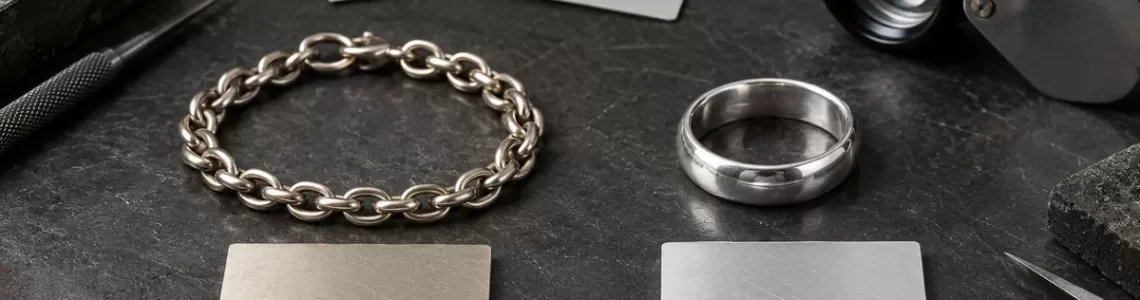
Quick answer: German silver is not sterling silver. “German silver,” also called nickel silver, normally describes a family of copper-nickel-zinc alloys whose pale color resembles silver but whose name does not prove elemental silver content. Sterling silver is a precious-metal fineness claim: in the United States, material represented as sterling must contain at least 925 parts pure silver per thousand. When comparing German silver vs sterling silver, read the exact material statement, separate the base metal from any plating, check marks within the relevant legal system, and use qualified testing when composition matters.
This distinction is about evidence, not about declaring one material suitable for every buyer. Nickel-silver alloys can be useful engineering and decorative materials. Sterling silver can also vary in construction, finish and added components. The error is treating a silver-colored name, surface or stamp as if it answered every material question.
This guide does not authenticate a particular ring or bracelet, assign one universal recipe to every nickel-silver object, diagnose nickel allergy, or promise that a home test can establish fineness. Product names, regulations and hallmarking practices vary by market. Read a live product page independently and preserve its description if a material claim affects your decision.
German silver vs sterling silver at a glance
- German silver / nickel silver
- A family of copper-nickel-zinc alloys. The Copper Development Association lists multiple wrought nickel-silver grades with different composition ranges. “Silver” in the name describes appearance or trade usage, not a guaranteed silver content.
- Sterling silver
- A silver-fineness description. U.S. federal guidance treats sterling as at least 925 parts pure silver per thousand. The remaining alloying portion improves practical properties, but the exact recipe and every component of a finished item still require product-specific information.
- Silver-plated nickel silver
- A layered construction: a nickel-silver base with a silver surface. It is neither solid sterling silver nor uncoated nickel silver. The coating can wear, and the base composition still matters.
- Silver-colored metal
- An appearance description only. It could refer to several alloys, platings or finishes. Color is not a fineness result.
The shortest buyer rule is: do not translate a material name into another material. “German silver” is not a regional style of 925 sterling, and “nickel silver” is not silver that happens to contain a little nickel. Conversely, a properly supported sterling claim should not be downgraded to “silver color” simply because an item lacks a mark that a buyer recognizes. Description, marking system, construction and testing each answer different questions.
What is German silver?
German silver is a traditional name for copper-nickel-zinc alloys. “Nickel silver” is the clearer technical term used in modern alloy references. The Copper Development Association groups wrought nickel silvers across multiple Unified Numbering System grades, and the NIST record for ASTM B122/B122M names copper-nickel-zinc alloy as nickel silver. These sources show an alloy family rather than one formula.
That matters because online explanations often repeat a single percentage recipe as if every German-silver object were identical. Actual standardized grades differ, and a finished object might also contain solder, plating, lacquer, steel springs, stones or other findings. A seller should state the relevant composition or standard when a precise alloy claim is important. A generic label is not a laboratory analysis.
The pale metallic color helped create the historical “silver” name. Similar appearance does not make it a silver alloy in the precious-metal-fineness sense. The FTC’s consumer guidance explicitly distinguishes sterling silver from German or nickel silver, and U.S. jewelry guidance warns against misrepresenting metallic content. The careful conclusion is not that every use of an old trade term is fraudulent; it is that buyers should not infer 925 fineness from that term.
What does 925 sterling silver mean?
Sterling is a composition claim, not merely a color or finish. Under 16 CFR §23.5, representing an industry product as “sterling silver” is deceptive in the United States if it contains less than 925 parts per thousand pure silver. The FTC’s consumer explanation expresses the same idea as 92.5% pure silver.
A 925 mark can support that representation, but the mark has limits. It does not identify every solder joint, clasp spring, pin, coating, gemstone or repair. It does not reveal who applied the mark, whether an independent assay occurred, or which jurisdiction’s system applies. The silver hallmark and maker-mark guide explains why the complete mark, sponsor or maker context and assay system matter.
UK hallmarking provides a useful example of why context matters. UK guidance describes a compulsory hallmark with a sponsor or maker’s mark, a metal-and-fineness mark and an assay-office mark, subject to applicable rules and exemptions. A solitary “925” is therefore not identical to a complete UK hallmark. Do not transplant one country’s system to every listing worldwide.
Does German silver contain any real silver?
The standard alloy name does not promise elemental silver. Nickel-silver references describe copper, nickel and zinc compositions. However, a particular object could have a silver coating, silver solder, an added sterling component or another construction not captured by the base-alloy name. That is why “German silver contains no silver” is useful only as a description of the named base-alloy family, not as a destructive verdict on every layered object carrying an old label.
Ask two separate questions:
- What is the bulk or base material? The answer might be nickel silver, sterling silver, brass, stainless steel or another alloy.
- What is on the surface? The answer might be no coating, silver plate, rhodium, lacquer, an oxidized finish or something else.
A seller who writes “silver-plated German silver” has made a layered claim. “Silver plated” describes the surface; “German silver” describes the base. The solid sterling versus silver-plated guide shows how to keep those two layers separate when comparing durability, care and value.
Appearance cannot prove German silver or sterling silver
Both materials can look bright, pale and reflective when new or polished. Lighting, camera white balance, surface texture, tarnish, lacquer and plating can make visual comparison even less reliable. A warm or cool cast in a product photograph is not a composition result.
Wear patterns can create clues but not proof. A different-colored layer at a high-contact edge may suggest plating over a base metal, while uniform wear may be consistent with a solid alloy. Neither observation determines 925 fineness. The item could be repaired, coated, hollow, intentionally oxidized or assembled from different components.
Magnet screening has the same limitation. Copper, silver, nickel-silver alloys and many other metals may show little attraction in an ordinary test, while a clasp spring can respond even when the main body is silver. The silver magnet test guide explains why “not magnetic” does not mean “sterling.” Nickel in an alloy name also does not guarantee that the finished object behaves like a household magnet.
Nickel and skin-contact questions
Nickel deserves a separate check because German silver normally identifies a nickel-containing alloy family. The American Academy of Dermatology notes that jewelry containing nickel can trigger allergic contact dermatitis in sensitized people. Symptoms can include an itchy rash where the item touches skin, but a rash has multiple possible causes and should not be diagnosed from a product name or photograph.
Content and release are also different measurements. European restrictions for articles intended for direct and prolonged skin contact focus on nickel release, not simply whether an alloy contains any nickel. Coatings can reduce contact when intact, but a coating is not permanent merely because it looks complete when new. Wear, pores, thickness, maintenance and testing method all matter.
Sterling silver is not automatically a universal “nickel-free” promise either. The sterling fineness number states the silver fraction, not the identity of every remaining alloying element or added finding. A manufacturer may provide a product-specific nickel-free claim, but buyers should verify what it covers. Read the 925 and nickel-free buyer guide for the difference between fineness, alloy recipe, component scope and nickel-release evidence.
If jewelry repeatedly causes itching, redness, blisters or scaling, stop wearing it and seek appropriate medical evaluation rather than repeatedly testing it against skin. A dermatologist can investigate allergy; a jeweler or qualified laboratory can investigate the item. Those are different tasks.
How to check a listing before buying
1. Read the exact material line. Look for “sterling silver,” “925 silver,” “nickel silver,” “German silver,” “silver plated,” or another explicit construction statement. Treat “silver tone,” “silver color” and “white metal” as appearance language unless the listing defines them.
2. Separate every layer and component. Ask whether the claim covers the body, plating, posts, clasp, spring, solder, chain, stone setting and decorative parts. A sterling pendant on a base-metal chain is not the same construction as an all-sterling assembly.
3. Inspect the complete mark. Record all letters, symbols and numbers, their location and their orientation. A partial photograph can hide a maker mark or plating abbreviation. Do not scrape or enlarge a mark while a return option remains open.
4. Compare words and photographs. If the title says “925” but the specifications say “alloy,” ask the seller to resolve the conflict in writing. Do not choose the more valuable interpretation automatically.
5. Keep the product record. Save the dated listing, invoice, option selected, seller response and return terms. Documentation will not turn an alloy into sterling, but it preserves the actual representation if the delivered item differs.
6. Match testing to the question. A professional X-ray fluorescence reading can provide elemental screening at the measured area, while a legally recognized assay or other method may be required for a fineness determination. Surface-sensitive readings can be affected by plating. Ask what instrument, calibration, sampling area and uncertainty apply. The appraisal versus lab-report guide explains why a document must match the object and question.
Home tests that do not settle the comparison
- Color: both materials and many coatings can be silver-colored.
- Magnet: weak or absent attraction does not establish silver fineness.
- Ice or heat-conductivity tricks: uncontrolled comparisons do not identify an alloy reliably and can risk stones, adhesives or finishes.
- Polishing cloth residue: dark residue can reflect surface compounds or polish action; it is not a 925 result.
- Scratch or filing: destructive exposure may reveal a layer difference but can damage the item and still fail to identify the base alloy.
- Acid testing: it is hazardous, destructive, surface-dependent and easy to misinterpret without training and controls.
A useful test should be specific, proportionate and documented. If the purchase is inexpensive and returnable, clear seller documentation may be more practical than destructive testing. If the claim materially affects price, safety, insurance or legal compliance, use a qualified professional and define the required conclusion before testing.
Care differences and shared precautions
Do not assume one cleaning method suits both materials. Sterling can tarnish, plated surfaces can wear, nickel-silver alloys can develop their own oxidation or discoloration, and lacquered surfaces can be damaged by a polish intended for bare metal. Stones, adhesives and deliberate dark finishes can be less tolerant than the metal body.
Start with the product-specific care instructions. For unknown jewelry, use a soft dry cloth and avoid aggressive chemicals, abrasives, prolonged soaking and ultrasonic cleaning until construction is confirmed. Do not polish through a silver coating while trying to make a plated nickel-silver object look like solid sterling.
Storage principles overlap: keep pieces dry, separate them to reduce scratching, and avoid trapping moisture or household chemical residue. If a coating is damaged, refinishing is a construction question, not proof that the original listing was correct or incorrect.
Which material should a buyer choose?
Choose based on verified construction, intended wear, skin-contact needs, care tolerance, design and price—not on the prestige suggested by a name. Sterling offers a defined precious-metal fineness when the claim is genuine and properly supported. Nickel silver can be a legitimate decorative or structural alloy, but it should be sold as what it is, and nickel-related concerns may matter for some wearers.
When browsing the live sterling and fine silver bracelet collection, check each product independently. A collection link is not an assay report, and statements from this educational article should not be transferred to a particular design. Verify material, component scope, dimensions, finish, care and return terms on the current product page.
The practical comparison is therefore not “cheap metal versus good metal.” It is a documentation and suitability decision. Accurate names let buyers compare like with like. Ambiguous names force buyers to guess—and guessing is exactly what a material specification should prevent.
FAQ
Is German silver real silver?
German silver or nickel silver normally names a copper-nickel-zinc alloy family, not a sterling-silver alloy. A particular object may have silver plating or a separate silver component, but that must be stated and verified separately.
Is nickel silver the same as German silver?
The names are commonly used for the same broad copper-nickel-zinc alloy family. Individual standardized grades vary, so the shared name does not establish one exact recipe for every object.
Is 925 German silver?
No. A legitimate 925 sterling representation means 925 parts silver per thousand. German or nickel silver refers to a different base-alloy family. A “925” mark on an item advertised as German silver creates a discrepancy that should be clarified, not resolved by guessing.
Can German silver be silver plated?
Yes. Nickel silver can be used as a base beneath silver plating. The object should then be understood as a layered product: silver on the surface and nickel silver underneath, not solid sterling silver.
Does German silver cause nickel allergy?
Nickel-containing jewelry can trigger allergic contact dermatitis in sensitized people, but a reaction depends on the wearer and nickel release from the finished item. This article cannot diagnose an allergy or predict a specific product’s release.
Will a magnet distinguish German silver from sterling?
Not reliably. Little or no attraction can occur with both and with many other materials. A clasp spring may respond differently from the body. Magnet screening cannot establish 925 fineness.
Why does German silver sometimes cost more than expected?
Price can reflect design, labor, age, maker, condition, rarity, plating or market demand. It does not convert the base alloy into sterling silver. Evaluate value claims separately from material identity.
What is the safest way to confirm the material?
Begin with the complete listing and marks, then use a qualified jeweler, assay office or laboratory when the claim matters. Ask whether the method measures the surface or bulk, how plating is handled and what conclusion the resulting document supports.
References
- Copper Development Association: Wrought Nickel Silvers
- Copper Development Association: Wrought Nickel Silver Data Sheets
- NIST: ASTM B122/B122M Incorporated by Reference
- U.S. FTC: Jewelry Guides
- U.S. FTC: Buying Platinum, Gold, and Silver Jewelry
- eCFR: 16 CFR §23.5 — Misrepresentation as to Silver Content
- UK Government: Hallmarking Guidance Summary
- American Academy of Dermatology: Nickel Allergy
- European Chemicals Agency: Nickel Restriction and Prolonged Skin Contact
Leave a Comment