
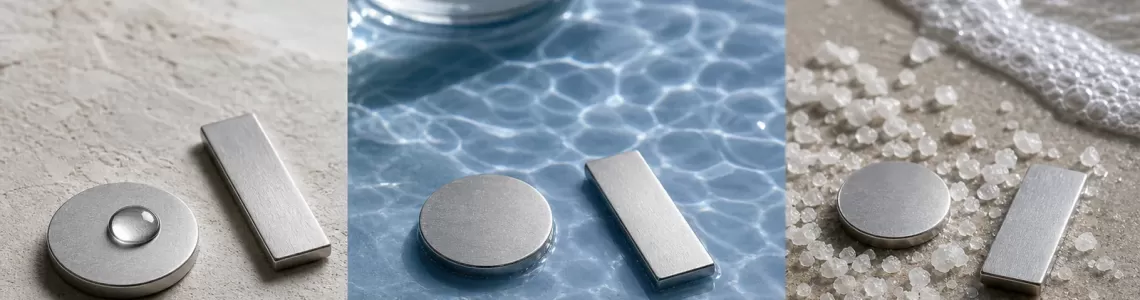
Answer first: A brief splash of clean water does not automatically ruin a plain sterling silver bracelet, but routinely wearing one in the shower, swimming pool, sea or hot tub creates avoidable exposure. The safest default is to remove the bracelet first. Chlorinated or brominated pool water, salt, sulfur-containing products, soap residues and heat can affect silver surfaces, alloying metals and non-silver components differently. If a bracelet gets wet, rinse off questionable residues when its construction allows, dry it completely with a soft lint-free cloth, and avoid aggressive polishing.
The important question is not simply “Can sterling silver get wet?” It is “What water, for how long, and what else is in the bracelet?” A solid metal cuff, a soldered chain, a pearl-and-silver bracelet and a silver bead on elastic do not have the same failure points. This guide separates the evidence about silver alloys from practical precautions for complete jewellery, so you can make a proportionate decision rather than treating every droplet as an emergency.
Research question, scope and evidence boundary
This guide asks how showers, tap water, pools, hot tubs and seawater may affect 925 sterling silver and higher-fineness silver bracelets. It covers surface change, corrosion risk, residues, construction and immediate care. It does not authenticate a product, predict the service life of an unknown bracelet, or claim that a specific sunMYLOVE item has been laboratory-tested in water.
The evidence base includes conservation guidance from the Canadian Conservation Institute (CCI), U.S. Federal Trade Commission definitions, CDC facts about recreational-water disinfection and peer-reviewed corrosion research. Conservation sources are deliberately cautious because repeated cleaning can remove metal or damage mixed materials. Laboratory studies help explain mechanisms, but a test coupon in a controlled solution is not the same as a finished bracelet worn on a person.
What “sterling silver” proves—and what it does not
In the United States, the FTC Jewelry Guides set standards for how silver fineness may be represented. Sterling silver refers to an alloy containing at least 925 parts silver per thousand, subject to the Guides' detailed provisions. That composition claim does not establish the exact alloy recipe, solder, plating, clasp spring, stone setting, cord, adhesive or waterproofness of the complete bracelet.
Higher fineness is not a waterproof rating either. A 999 fine silver component contains a greater proportion of silver, but its finished performance still depends on geometry, fabrication and everything attached to it. For a composition-first comparison, read the 925 sterling silver vs 999 fine silver bracelet guide. For water decisions, inspect the entire object rather than relying on one stamp.
Water exposure is not one uniform condition
| Exposure | Practical risk level | Main concerns | Safer response |
|---|---|---|---|
| Brief clean-water splash | Usually lower for plain, intact metal | Trapped moisture, water spots, unknown finish | Blot and dry fully; inspect joints and crevices |
| Hand washing | Low to moderate | Soap, sanitizer, repeated wet-dry cycles | Remove first when practical; do not leave residue under the bracelet |
| Shower or bath | Moderate and avoidable | Soap, shampoo, heat, long contact, snagging | Remove before bathing |
| Chlorinated pool | Higher | Disinfectants, chloramines, variable water chemistry | Remove before swimming; rinse and dry after accidental exposure |
| Hot tub | Higher | Disinfectants plus heat and prolonged immersion | Remove before entering |
| Sea or salt water | Higher | Chloride salts, deposits, sand abrasion, loss risk | Remove before swimming; rinse residue only if construction permits, then dry |
| Household cleaning water | High and unpredictable | Bleach, acids, ammonia, sulfur compounds, abrasives | Remove jewellery before cleaning |
These levels are a decision aid, not a guarantee. Water chemistry differs by location, and exposure time, temperature and residue all matter. A lower-risk splash can become a problem when moisture stays inside a cord channel, beneath a stone, between hollow parts or under a close-fitting bracelet.
Why silver changes appearance
Silver tarnish is often primarily silver sulfide rather than “rust.” CCI's Care of Silver explains that sulfur-containing compounds are important tarnish agents and advises identifying construction and non-metal elements before choosing a cleaning method. CCI's technical discussion of how silver objects tarnish also shows that environmental gases and moisture influence the process.
Moisture therefore matters, but water alone is not the entire story. Shower products may leave films. Rubber, wool, some papers, cosmetics and polluted air may introduce sulfur compounds. Perspiration and seawater introduce salts. CCI's broader metal-care guidance notes that sodium chloride can react with silver to form silver chloride, which may darken with light exposure.
Peer-reviewed work on sterling silver in corrosive environments confirms that moisture, sulfur species and alloy composition affect surface reactions. A Heritage Science study of sterling silver sulfidation compared controlled environments and found that conditions changed the corrosion products and process. It supports environmental caution, not a claim that one shower has a predictable result.
Does chlorine damage sterling silver?
Swimming pools are chemically managed environments, not large containers of plain tap water. The CDC's healthy swimming guidance explains that chlorine or bromine is used to kill germs. The CDC also describes chloramines formed when chlorine combines with substances introduced by swimmers. These facts establish that pool water contains reactive chemicals; the CDC does not test or certify jewellery.
Because alloy recipes, pool chemistry, contact time and bracelet construction vary, there is no responsible universal countdown for damage. The practical recommendation is simpler: remove sterling silver jewellery before pools and hot tubs. This prevents chemical exposure, reduces the chance of losing a bracelet and protects clasps, stones, elastic and adhesives that may be more vulnerable than the silver itself.
Does salt water tarnish sterling silver?
Salt water creates a chloride-rich environment and leaves deposits as it dries. Sand can also scratch polished surfaces, while waves and cold water increase the chance of losing a loosely fitted bracelet. Research on Ag-Cu-Zn sterling-type alloys in chloride, artificial-sweat and sulfide solutions found that composition changed hardness and corrosion behaviour. The laboratory study is useful mechanistic evidence, but it did not test every commercial bracelet or ordinary beach visit.
Remove silver bracelets before entering the sea. If accidental exposure occurs, do not wait for salt crystals to dry in crevices. For a plain, structurally sound metal bracelet without sensitive additions, a brief rinse with clean lukewarm water can remove salt, followed by complete drying. For pearl, porous stone, wood, cord, elastic, glued or deliberately patinated designs, follow the care instructions for the most sensitive component instead of immersing the whole piece.
Can you shower with a sterling silver bracelet?
You may find anecdotes from people who shower with sterling silver without obvious damage, but that is not a controlled durability test. Showering adds warm water, soap, shampoo, conditioners, cosmetic residues and repeated wet-dry cycles. It also exposes chains and cords to snagging. Since the exposure brings no jewellery-care benefit, removal is the better routine.
If frequent removal is difficult, choose a closure you can operate safely and store the bracelet in the same dry place before bathing. Do not place it on a wet sink edge, where it can pick up cleaning chemicals or fall into a drain. A simple tray outside the bathroom is safer than relying on memory in the shower.
The complete bracelet matters more than the silver number
| Construction | Water-sensitive points | What to check |
|---|---|---|
| Solid metal cuff | Patina, coatings, solder, deep texture | Finish instructions, cracks, trapped residue |
| Chain bracelet | Clasp spring, soldered links, hollow parts | Closure operation, joint condition, full drying |
| Silver beads on elastic | Elastic fatigue, trapped moisture, internal abrasion | Stretch recovery, knots, bead holes |
| Silver on cord or red string | Dye transfer, cord weakening, slow drying | Whether the cord is designed to be wet |
| Silver with pearls | Nacre, stringing, cosmetics, adhesives | Follow pearl-safe care; avoid immersion by default |
| Silver with stones | Porosity, treatments, settings and glue | Verified stone identity and individual care limits |
For example, the 925 silver red string bracelet should be evaluated as a cord-and-metal object, not as silver alone. The freshwater pearl and 925 sterling silver bracelet combines materials with different care needs. These are construction examples, not claims that either product has been water-exposure tested.
What to do if a sterling silver bracelet gets wet
- Remove it safely. Do not tug an elastic bracelet or force a wet clasp.
- Identify the exposure. Clean water, pool water, seawater, soap and household cleaner require different urgency.
- Check all materials. Look for pearls, porous stones, wood, cord, elastic, adhesive, coatings and intentionally darkened finishes.
- Remove harmful residue conservatively. For plain intact silver, a brief clean-water rinse may be appropriate. Do not immerse a mixed-material piece unless its care instructions permit it.
- Blot rather than scrub. Use a clean soft lint-free cloth. Abrasive towels can create fine scratches.
- Dry crevices completely. Let the bracelet finish air-drying in a clean ventilated place away from direct heat. Do not use a hair dryer.
- Inspect before wearing. Check clasp action, cords, elastic, settings, joins and surface changes.
- Escalate when needed. If bleach, strong cleaner or unknown chemicals contacted the bracelet—or a setting, cord or clasp changed—ask a qualified jeweller before polishing or wearing it.
Do not combine household remedies on an unknown finish. Toothpaste, baking soda pastes, dips and aggressive polishing can remove metal or alter patina. CCI warns that polishing is an abrasive process and repeated polishing removes silver. The conservative sunMYLOVE silver bracelet cleaning and storage guide explains a routine for ordinary care.
A 30-second decision checklist before water exposure
- Is the exposure optional? If yes, remove the bracelet.
- Is the water chlorinated, brominated, salty, hot or mixed with cleaning products? Remove it.
- Does the bracelet contain pearls, wood, treated stones, elastic, cord or adhesive? Follow the most sensitive component's instructions.
- Is the fit loose enough to slip off in water? Remove it regardless of material.
- Is the finish oxidized, plated, lacquered or intentionally patinated? Verify finish-specific care first.
- Are there damaged links, loose settings or a weak clasp? Stop wearing it until inspected.
Common mistakes
Assuming 999 silver is waterproof
Higher fineness describes composition, not resistance to every environment. Softness, construction and attached components still matter.
Polishing immediately after every splash
Drying is not the same as polishing. Unnecessary abrasion gradually removes metal and may flatten detail or alter an intentional finish.
Cleaning to a colour target
A darkened recess may be an intentional oxidized finish rather than dirt. Confirm the design before trying to make every surface bright.
Treating a mixed-material bracelet like a silver spoon
Immersion methods that may be acceptable for a plain silver object can damage cord, pearls, wood, stones or adhesive. CCI specifically advises assessing non-metal components before treatment.
Believing water resistance can be inferred from a stamp
A 925 mark does not describe a clasp spring, solder, coating or stringing material. Read the complete product specification and care information.
Frequently asked questions
Can sterling silver get wet once?
A brief splash of clean water does not automatically ruin plain sterling silver. Remove residues, dry the bracelet completely and inspect it. Risk rises with chemicals, salt, heat, prolonged immersion and mixed materials.
Can I wash my hands while wearing a silver bracelet?
Occasional clean-water contact is lower risk than swimming, but soap and sanitizer can accumulate and moisture may remain under the bracelet. Removing it before washing is the safer routine when practical.
Can I shower with a 925 silver bracelet?
It is better to remove it. Warm water, shampoo, soap and repeated wet-dry cycles are avoidable exposures, and non-silver parts may be more sensitive than the alloy.
Can I swim in a pool with sterling silver?
Remove the bracelet first. Pools use chlorine or bromine disinfectants, and the exact water chemistry and bracelet construction are rarely known to the wearer.
Can I wear sterling silver in the ocean?
Removal is recommended. Salt deposits, sand abrasion and loss risk add concerns beyond the silver surface itself.
What if pool or sea water touched my bracelet?
Remove it, identify all materials, conservatively remove residues when the construction permits, blot with a lint-free cloth, dry completely and inspect the closure and settings. Seek professional advice after strong chemical exposure or visible damage.
Does water make sterling silver turn black?
Dark tarnish is commonly associated with sulfur-containing compounds, while moisture and other contaminants influence the reaction. Water chemistry, residues, alloy and environment all matter; colour change alone cannot identify the exact cause.
Can 999 fine silver get wet?
It can contact water without an automatic failure, but 999 is a fineness designation, not a waterproof rating. Use the same exposure and construction checklist, especially for beads on cord, elastic or mixed-material designs.
Buying and care questions to ask the seller
- Which parts are 925, 990 or 999 silver?
- What are the clasp, solder, cord, elastic and decorative components made from?
- Is the surface plated, lacquered, oxidized or intentionally patinated?
- Are any stones treated, porous or glued?
- What water and chemical exposures should be avoided?
- What cleaning method is approved for the complete bracelet?
Browse the sterling silver bracelet collection and compare individual specifications rather than applying one rule to every design. Before ordering, review sunMYLOVE's delivery information and returns information. Learn how the brand presents and reviews product information on the About sunMYLOVE page.
Method and evidence scope
sunMYLOVE reviewed official conservation, consumer-protection and public-health guidance together with peer-reviewed corrosion research. We prioritized sources that explain mechanisms and evidence limits. We did not infer waterproofness from a hallmark, seller description, anecdote or AI-generated summary. Search demand for the exact primary keyword was not available from a reliable first-party source at review time and is therefore recorded as UNKNOWN.
The recommendations are intentionally conservative. They distinguish a plausible mechanism from a guaranteed outcome and a laboratory material from a complete commercial bracelet. Individual products should be assessed from documented composition, construction and care instructions.
References and evidence scope
- Canadian Conservation Institute. Care of Silver, CCI Note 9/7. Supports conservative cleaning, construction assessment and limits of polishing.
- Canadian Conservation Institute. Understanding How Silver Objects Tarnish. Supports the roles of sulfur-containing gases and environmental moisture.
- Canadian Conservation Institute. Caring for Metal Objects. Supports chloride and preventive-conservation context.
- U.S. Federal Trade Commission. Guides for the Jewelry, Precious Metals, and Pewter Industries. Supports silver-fineness terminology, not waterproofness.
- U.S. Centers for Disease Control and Prevention. Healthy Swimming: What You Can Do. Supports pool disinfection facts, not jewellery-specific durability.
- Franey et al. The sulfidation process of sterling silver in different corrosive environments, Heritage Science. Laboratory evidence; not a lifespan test of finished bracelets.
- Kosec et al. Silver alloy behaviour in chloride, artificial sweat and sulfide media, Chemical Industry & Chemical Engineering Quarterly. Laboratory alloy evidence; results should not be generalized to every commercial object.
Reviewed: August 2, 2026. sunMYLOVE editorial note: This research-based buying and care guide separates documented material facts from practical inference. It is educational information, not a product test, appraisal or guarantee.
Leave a Comment