
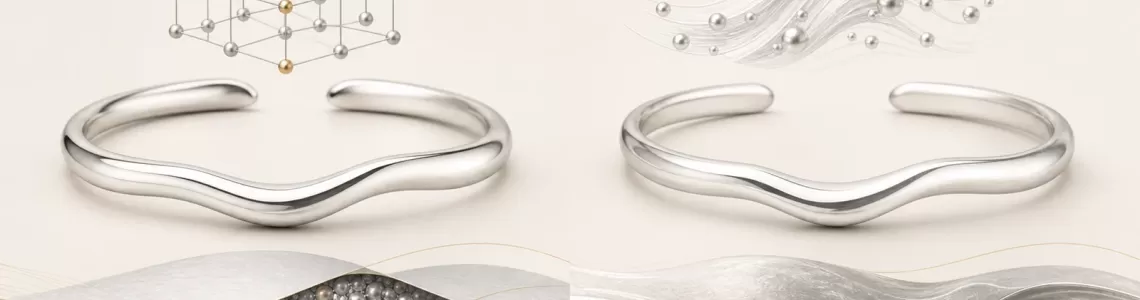
Answer first: Choose a 925 sterling silver bracelet when you want a practical balance of silver content, shape retention and design flexibility for regular wear. Choose a 999 fine silver bracelet when high silver fineness matters most and the design is substantial, simple and suitable for gentler wear. Neither number is an automatic quality score. In the United States, a product represented as sterling silver must be at least 925 parts silver per thousand; 999 indicates 999 parts silver per thousand. Construction, thickness, joints, finish, testing and care still determine how a finished bracelet performs.
A stamp is useful identification, but it is not the same as an independent assay or government-recognized hallmark. Before buying, compare the fineness claim, bracelet geometry, size, closure, responsible seller information, care instructions and return terms. This guide explains what 925 and 999 can prove, what they cannot prove, and how to choose without relying on purity marketing alone.
Research question, scope and evidence boundary
This guide asks: How should a buyer compare sterling silver and 999 fine silver bracelets for composition, durability, tarnish, verification and daily use? It covers silver fineness and finished-bracelet buying decisions for United States and international shoppers. It does not authenticate a specific item, replace an assay, interpret every national hallmarking law, or claim that wearing silver produces a health benefit.
The core evidence comes from the U.S. Federal Trade Commission, U.S. regulations, ISO precious-metal standards, the British Hallmarking Council, CIBJO and peer-reviewed materials research. These sources support a careful distinction: fineness is a measurable proportion of silver in an alloy, while performance is a property of the complete object.
What do 925 and 999 mean?
| Mark or description | Composition meaning | What it does not establish |
|---|---|---|
| 925 or sterling silver | At least 925 parts silver per 1,000 under the FTC standard for a sterling claim | Exact alloy recipe, workmanship, origin, treatment, durability or independent testing |
| 999 or fine silver | 999 parts silver per 1,000 as a fineness designation | That the bracelet cannot scratch, bend, tarnish or contain non-silver findings |
| Fineness stamp alone | A seller or manufacturer is representing a composition | Independent verification or a complete hallmark in jurisdictions that require one |
The FTC consumer guide explains that the words silver, sterling and sterling silver describe products containing 92.5 percent pure silver, and that 925 expresses the same proportion as parts per thousand. The underlying 16 CFR 23.5 says it is deceptive to use a silver fineness mark when the product is below the represented standard, subject to the regulation's tolerances and qualifications.
ISO 9202:2026 specifies fineness ranges for precious-metal jewellery alloys, while ISO 15096:2020 describes a method for determining silver in 999-per-thousand silver. The existence of a test method is important: a fineness claim is a compositional question that can be measured, not a conclusion that should be drawn from color or softness at home.
Why sterling silver is usually chosen for detailed daily-wear jewellery
Nearly pure silver is comparatively soft and ductile. Alloying silver with other metals can increase hardness and strength, which helps a thin or detailed piece resist deformation. This is why sterling silver is widely used for chains, clasps, narrow cuffs, prongs and designs that need to hold a precise shape.
That principle is not a promise that every 925 bracelet is stronger than every 999 bracelet. A thick fine-silver cuff can outlast a very thin sterling component. Cold work, heat treatment, cast porosity, soldered joints, chain-link dimensions, surface texture and the direction of force all matter. Peer-reviewed research on silver alloys shows that composition and processing change microstructure and mechanical behavior; it does not justify predicting the life of an unknown bracelet from a stamp alone.
For a broad view of designs built around this practical alloy standard, compare the sunMYLOVE sterling silver bracelet collection. Look beyond the category label and read the individual product specifications, because bead size, chain construction and closures create different wear profiles.
Why buyers choose 999 fine silver
Fine silver appeals to buyers who prioritize very high silver content, a particular color and a traditional or minimalist material preference. Its greater malleability can suit substantial beads, broad cuffs and forms that do not rely on very thin load-bearing parts. Surface marks may develop as the object is worn; some owners accept this as part of a personal patina, while others prefer the sharper shape retention of an alloyed design.
Three sunMYLOVE examples illustrate different 999 constructions: the SUERTE 999 fine silver bead bracelet, the Eternal Heart large-bead 999 fine silver bracelet and the multi-layer 999 fine silver medal bead bracelet. These links are examples of product forms, not laboratory certificates. Buyers should use the visible specifications and seller documentation for the exact item offered.
Is 999 silver always better than 925 silver?
No. Higher fineness means a higher proportion of silver; it does not mean universally better jewellery. The better choice depends on the user's task.
| Buying priority | Usually the stronger candidate | Why | Check before purchase |
|---|---|---|---|
| Thin, detailed everyday bracelet | 925 sterling silver | Alloying commonly improves shape retention | Link thickness, clasp, solder joints and fit |
| High silver fineness | 999 fine silver | Contains a greater proportion of silver | Evidence for the fineness claim and all component materials |
| Substantial beads or a simple broad form | Either, depending on construction | Geometry may matter more than the fineness difference | Dimensions, weight, stringing or hinge design |
| Minimal bending and sharper detail over time | Often 925 sterling silver | Greater hardness can help resist deformation | Actual thickness, processing and intended use |
| Preference for a softer evolving surface | 999 fine silver | Fine silver can mark and develop wear character more readily | Whether scratches and shape change are acceptable |
Can 925 or 999 silver tarnish?
Both can change appearance. Sterling silver commonly contains copper or another alloying metal, and environmental sulfur compounds can contribute to darkening. Fine silver is not immune to surface change, contamination or scratching. Cosmetics, perspiration, chlorinated water, rubber, household chemicals, polluted air and storage conditions may affect a piece differently.
Do not diagnose composition from tarnish speed. A coating may delay darkening, polishing may remove a surface film, and two pieces stored in different environments are not a controlled comparison. Use the sterling silver bracelet care guide for a conservative cleaning and storage routine. GIA also recommends avoiding harsh chemicals and using care appropriate to the jewellery's materials and construction in its jewellery care guidance.
Does higher silver purity mean a bracelet is hypoallergenic?
No fineness number alone proves that a complete bracelet will be suitable for a particular person. Sterling silver is an alloy, but the stamp does not identify every alloying metal. A bracelet may also include solder, clasp springs, plating, cord, elastic, adhesives or decorative components with a different composition. Even a 999 silver body can be assembled with non-999 findings.
If you have a known metal allergy, ask for the composition of all skin-contact parts and consult an appropriate medical professional about your individual exposure. This guide does not claim that silver prevents or treats dermatitis, pain, circulation problems, infection or any other condition.
How to verify a silver fineness claim
1. Read the entire product description
Look for a precise statement such as 925 sterling silver or 999 fine silver, not the vague phrase silver tone. Confirm whether the claim describes the whole bracelet, only beads, a charm, a plating layer or a specific component.
2. Inspect marks, but keep their limits in mind
A 925 or 999 stamp is useful evidence of the maker's representation. It is not proof that an independent body tested the piece. A photograph of a stamp can also belong to a component rather than every part of the bracelet.
3. Distinguish a stamp from a hallmark
The British Hallmarking Council guidance explains that a complete UK hallmark includes a sponsor or maker mark, an assay office mark and a fineness mark. Its fineness guidance lists recognized standards and shows why legal terminology differs by market. A U.S. product listing should not imply UK assay-office verification unless that hallmark is genuinely present and documented.
4. Ask what evidence supports the listing
Useful answers may include a supplier specification, manufacturing record, assay result or recognized hallmark. The seller should separate documented information from assumptions. A magnet, ice test, polishing cloth or visual check cannot establish exact 925 or 999 fineness.
5. Use professional testing when the decision requires it
Appropriate methods can include X-ray fluorescence screening, fire assay or other laboratory techniques, with limitations that depend on sampling, coatings and instrument setup. CIBJO's Blue Books provide international nomenclature and responsible-trade guidance, but an online definition is not a test result for a specific bracelet.
A practical seven-point decision method
- Define frequency: daily wear, occasional wear or ceremonial use.
- Study geometry: thin chain, linked plate, elastic beads, broad cuff or articulated construction.
- Match fineness to form: favor sterling for thin precision parts; consider fine silver for substantial simple forms when surface wear is acceptable.
- Confirm all components: body, beads, clasp, solder, string, coating and decorative inserts may differ.
- Check size: a bracelet that is too tight experiences more stress; one that is too loose catches and impacts more often.
- Review care expectations: determine whether the finish is polished, oxidized, brushed, plated or intentionally patinated.
- Check remedies: read the returns and refunds policy and delivery information before ordering.
Care steps for either silver fineness
- Remove the bracelet before swimming, household cleaning, sports or work that can bend links or strike hard surfaces.
- Apply fragrance, lotion and hair products before putting jewellery on, then allow them to dry.
- After wear, wipe the surface gently with a clean, soft cloth. Do not force a fine-silver component back into shape repeatedly.
- Store pieces separately in a dry, closed container to reduce abrasion and environmental exposure.
- Use a silver-care product only when compatible with stones, coatings, oxidized details, cords and adhesives.
- Ask a jeweller to inspect distorted links, loose beads, damaged clasps or cracked solder before continued wear.
Common buying mistakes
- Treating 999 as a universal quality grade: fineness does not grade workmanship or design.
- Assuming 925 is fake silver: sterling is a recognized silver alloy standard, not an imitation term.
- Believing a stamp is conclusive: the mark is a claim unless supported by the relevant verification.
- Ignoring non-silver components: clasps, solder, cords and coatings can affect wear and skin contact.
- Using a home test to claim exact purity: exact fineness requires suitable analytical evidence.
- Choosing a tight fit for a soft or linked design: repeated load can deform parts even when the metal claim is accurate.
- Expecting health effects: silver fineness is not evidence that wearing a bracelet improves health.
Frequently asked questions
What is the difference between sterling silver and 999 fine silver?
Sterling silver is at least 925 parts silver per thousand under the U.S. sterling standard. A 999 designation represents 999 parts silver per thousand. Sterling contains more alloying material and is commonly better suited to thin, detailed or shape-dependent jewellery.
Is 999 silver softer than 925 sterling silver?
As a general materials principle, very high-purity silver is softer and more ductile than common sterling alloys. Finished-object behavior still depends on thickness, shape, work-hardening, joints and manufacturing quality.
Which silver is better for an everyday bracelet?
925 sterling silver is often the practical choice for slim chains, clasps and detailed daily-wear designs. A substantial 999 fine silver bracelet can also work for regular wear if the owner accepts easier scratching or deformation and follows suitable care.
Does a 925 or 999 stamp prove authenticity?
No. It records a represented fineness. Stronger evidence can include a recognized hallmark, traceable manufacturing documentation or appropriate professional testing.
Can 999 fine silver tarnish?
Yes. High-purity silver can experience surface change, contamination and scratching. It may behave differently from a copper-bearing sterling alloy, but the 999 mark is not a no-tarnish guarantee.
Is sterling silver safe for sensitive skin?
A sterling mark does not identify every alloying metal or every component touching skin. Buyers with known allergies should request complete material information and obtain individual medical advice where needed.
Can I test 925 versus 999 silver at home?
Home observations may reveal obvious inconsistencies but cannot establish exact fineness reliably. Professional methods and qualified interpretation are required when exact composition matters.
Does wearing 999 silver provide health benefits?
Silver fineness is a composition measure, not clinical evidence. There is not sufficient reliable evidence to claim that wearing a silver bracelet treats or prevents disease, improves circulation, relieves pain, supports immunity or detoxifies the body.
Method and evidence scope
sunMYLOVE reviewed U.S. consumer guidance and regulation for the meaning of silver claims, ISO pages for jewellery-alloy fineness and high-purity silver testing, UK hallmarking guidance for the distinction between a simple fineness mark and an assay-office hallmark, CIBJO nomenclature resources, GIA care guidance and peer-reviewed materials research. We used these sources to explain general buying principles. We did not assay the linked products, extrapolate a laboratory sample into a health claim, or treat one jurisdiction's hallmarking law as universal.
References and evidence scope
- U.S. Federal Trade Commission, Jewelry Guides - advertising and composition-claim framework.
- FTC Consumer Advice, Buying Platinum, Gold, and Silver Jewelry - consumer explanation of sterling and 925.
- 16 CFR 23.5, Misrepresentation as to silver content - U.S. regulatory text.
- ISO 9202:2026, Jewellery and precious metals - Fineness of precious metal alloys - fineness framework.
- ISO 15096:2020, Determination of silver in 999 per thousand silver - analytical method scope.
- British Hallmarking Council, Hallmarking guidance summary - components of a UK hallmark.
- CIBJO Precious Metals Blue Book - international trade terminology and standards context.
- Peer-reviewed study of sterling-silver alloy microstructure and tarnish resistance - alloy and processing evidence; not a finished-bracelet guarantee.
Reviewed: August 1, 2026.
sunMYLOVE editorial note: We separate documented standards from reasonable product-use inferences. Product-level composition should be confirmed from the listing and available evidence; jewellery should not be marketed as a medical treatment.
Leave a Comment