
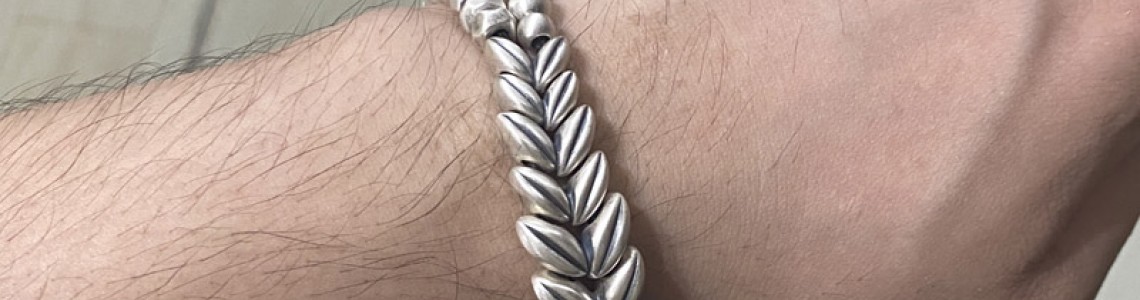
Quick answer: Choose one dominant wrist element and let the rest support it. Match or deliberately contrast metal tone, keep bracelet and watch from competing in scale, leave enough fit to move comfortably without striking hard surfaces, and reduce layers for formal or minimal outfits.
At a glance
- Start with one bracelet before building a stack.
- Repeat one visual cue: metal tone, bead size, color or texture.
- Separate hard silver beads from a watch if scratching is a concern.
- Let sleeve length and occasion control visual volume.
- Comfort and safety override styling rules.
Use visual scale, not gender labels
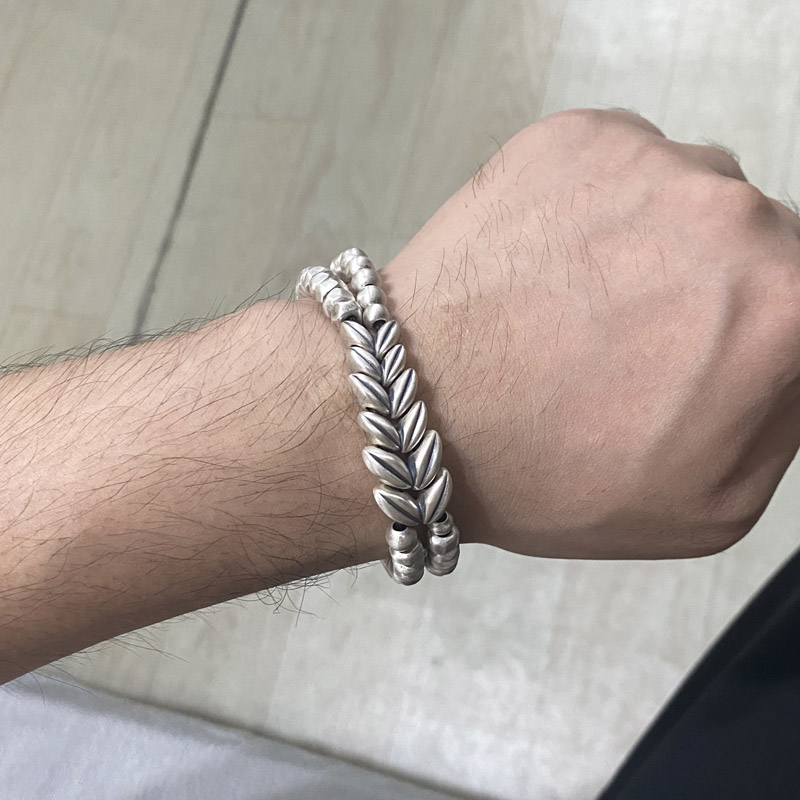
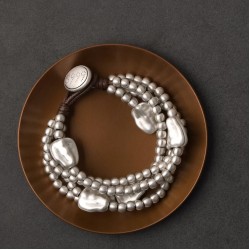
A 6 mm bead reads quieter than a 10 mm bead, while multi-strand construction increases presence even with small components. Compare the bracelet with wrist width, watch case and sleeve. A slim bracelet can sit under a cuff; a heavier strand works better as the single focal point. There is no universally masculine diameter. The useful question is how much contrast and movement you want in the complete outfit.
Pair a bracelet with a watch
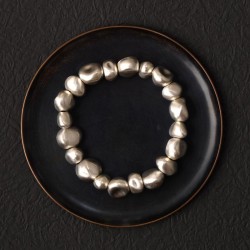
The easiest combination repeats the watch's metal tone and keeps one piece visually simpler. A silver bracelet can echo a steel watch, while dark beads can connect with a black or brown strap. Wear hard beads on the opposite wrist if contact could scratch the watch or create noise. If they share a wrist, allow enough space to avoid binding but not so much that the bracelet slides under the watch case.
Build a controlled stack
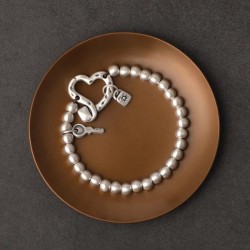
Begin with two pieces and vary only one dimension at a time. Pair a silver bead strand with a narrow cord, or combine two bead sizes within one color family. Avoid stacking several large, reflective and symbolic designs simultaneously unless maximal styling is intentional. Keep total width proportional to the visible wrist area. Recheck fit because multiple bracelets can trap heat, pinch skin or increase friction.
Adapt to clothing and occasion
For tailored clothing, use one refined bracelet with a clean finish and limited movement. Casual denim, knitwear and rolled sleeves can support more texture. At work, consider typing comfort, desk contact and dress policy. For travel or events, choose a secure closure and avoid pieces that must be removed frequently at security or during activity. Photograph a successful combination in natural light; it creates a more reliable personal reference than a generic trend list. A bracelet should support the wearer, not require constant adjustment.
Practical decision checklist
- Identify the exact material, finish and construction stated on the product page.
- Measure the intended wrist and follow that product's sizing convention.
- Check how water, cosmetics, friction and storage affect every component.
- Confirm quantity, delivery timing, return terms and customization limits before payment.
- Save the listing and order record, then inspect the delivered item before wear.
Continue your research
- Shop fine and sterling silver bracelets
- 925 vs 990 vs 999 silver guide
- How to measure wrist size
- Sterling silver bracelet care guide
How to use this guide
Use this styling guide as a proportion check. Choose the watch or bracelet that will lead the wrist, match or intentionally contrast metal tones, and leave enough visual space for each piece to read clearly. Fit and comfort take priority over a photographed stack.
Frequently asked questions
Which wrist should a man wear a bracelet on?
Either. Choose the side that is comfortable and reduces contact with a watch, desk or dominant-hand tasks.
Can silver and gold tones be mixed?
Yes, when the contrast is deliberate and one repeated element ties the look together.
How many bracelets are too many?
When comfort, movement or a clear focal point is lost. Start with one or two and assess the complete outfit.
Can a bead bracelet be formal?
A restrained scale, clean finish and quiet color palette can work with many smart and formal outfits.
Sources and editorial scope
Editorial note: Prepared and reviewed by the sunMYLOVE product content team. Material, care and consumer-information statements were checked against the sources above and the store's published product specifications. We do not invent laboratory testing, professional credentials or medical benefits. Last reviewed: July 20, 2026.
Leave a Comment