
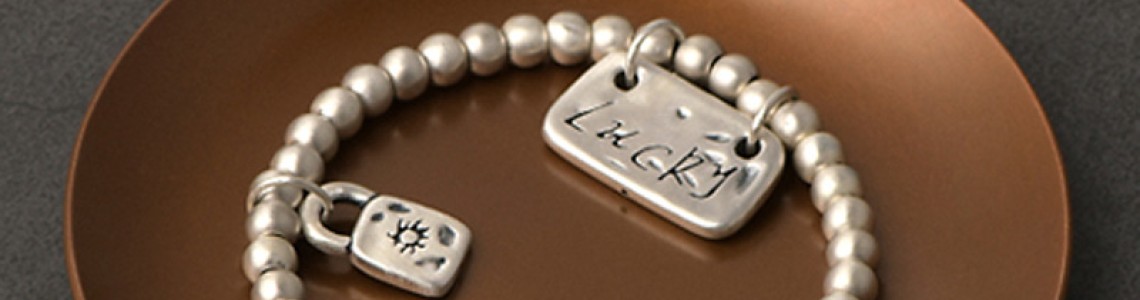
Quick answer: 925, 990 and 999 describe nominal silver fineness in parts per thousand: 92.5%, 99.0% and 99.9% silver. They do not create a simple good-better-best ladder. For a bracelet, the practical choice depends on alloy strength, bead or link construction, weight, finish, repairability and the way the piece will be worn. Sterling silver is usually the most practical daily-wear alloy; 990 offers high fineness with slightly more alloying content than 999; 999 fine silver prioritizes silver content but can deform more readily in thin or highly stressed forms.
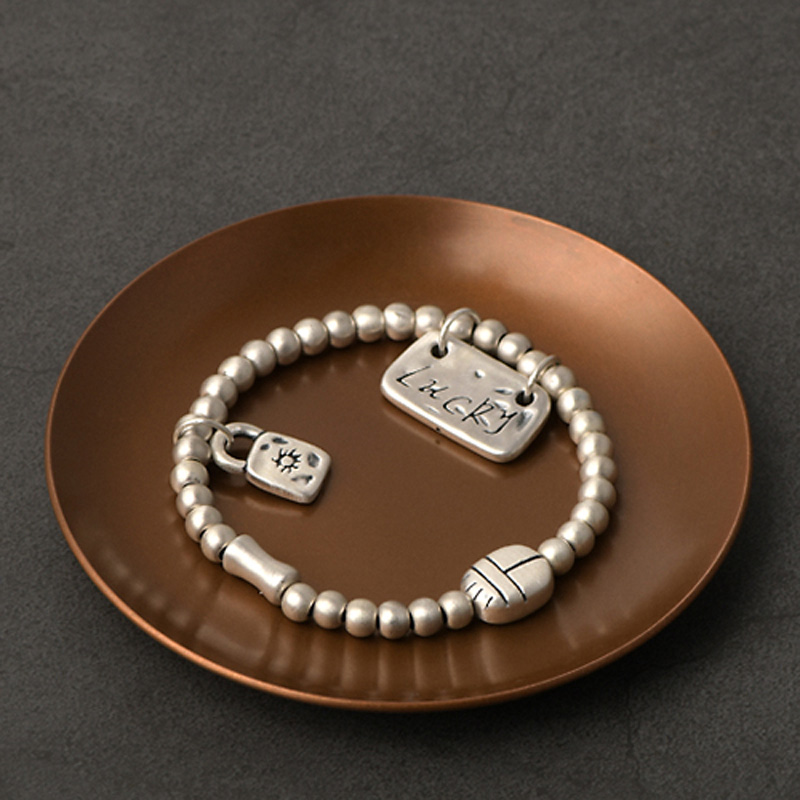
925 vs 990 vs 999: comparison table
| Mark | Nominal silver content | Typical practical emphasis | Questions to ask |
|---|---|---|---|
| 925 | 925 parts silver per 1,000 | Strength, broad availability and everyday jewelry construction | What is the remaining alloy, and is the piece solid, hollow, plated or mixed? |
| 990 | 990 parts silver per 1,000 | High-fineness appearance with a small alloy fraction | How are high-stress links, holes, clasps and bead walls engineered? |
| 999 | 999 parts silver per 1,000 | Maximum stated fineness among these three options | Is the form thick enough for wear, and which parts are not 999 silver? |
The number is a composition statement, not a complete durability specification. Two bracelets marked 925 can perform very differently when one uses thick solid beads and the other uses thin hollow forms. Likewise, a substantial 999 bead may survive ordinary wear better than a delicate 925 chain simply because its geometry carries stress differently.
Why 925 sterling silver is common for daily wear
Sterling silver contains at least 925 parts silver per thousand under the terminology described in the U.S. Federal Trade Commission Jewelry Guides. The remaining fraction allows makers to adjust mechanical properties and manufacturing behavior. That does not make every sterling alloy identical: alloy recipe, work hardening, solder, casting quality, surface treatment and final construction still matter.
For buyers, 925 is often the easiest fineness to compare across clasps, chains, bead cores and repair services. It is a practical default when a bracelet will be worn frequently, layered with a watch or exposed to repeated fastening. The correct conclusion is not that 925 is indestructible; it is that the alloy is widely used because it can balance silver content with workable jewelry performance.
What changes with 990 fine silver
990 means 99.0% silver by the stated millesimal measure. Visually it may appear bright and silver-rich, but color alone cannot distinguish 990 from a well-finished 925 piece. The difference is more meaningful when considered with the actual form: a high-fineness bead, a hammered element and a thin clasp experience stress in different ways.
Choose 990 when the product clearly documents its construction and you prefer higher silver content without moving to the 999 designation. Confirm whether every component shares the same fineness. Cord, elastic, solder, internal cores, clasps and decorative spacers may have separate specifications and should not be inferred from the headline material.
What 999 fine silver does—and does not—promise
999 is a 999-parts-per-thousand fineness statement. It indicates very high nominal silver content, but it does not mean absolute chemical purity, superior workmanship or automatic authenticity. Fine silver is generally softer than common sterling alloys, so thin projections, lightly built jump rings or narrow holes can be more vulnerable to deformation.
That softness can also be useful in thick beads, hand-worked surfaces and designs where the maker plans around the material. Evaluate the dimensions and stress points rather than rejecting or preferring 999 on the number alone. A strong product page should state which components are 999 and which use another metal or construction.
Construction can outweigh the fineness difference
Bracelet performance is a system. Examine bead wall thickness, drilled-hole edges, link gauge, clasp design, elastic or cord type, crimping and the way heavy components contact one another. Hollow construction lowers weight but may dent more easily; solid construction can increase weight and cost. Oxidized recesses, plating and applied coatings change the care method even when the underlying metal is known.
Do not compare prices from metal percentage alone. Record total weight, non-silver components, bead dimensions and whether the advertised figure refers to the whole bracelet or only selected parts. The fine and sterling silver bracelet collection provides product-specific materials and sizing to compare with this framework.
Tarnish, color and maintenance
All three finenesses can change appearance. Tarnish depends on the alloy, environment, sulfur-containing compounds, cosmetics, storage and finish. Higher silver content does not make a bracelet maintenance-free, while a darkened 925 surface does not show that the underlying material is fake. Intentional oxidation should not be polished as if it were accidental tarnish.
Begin with a soft dry cloth. Keep bracelets away from chlorine, household chemicals and prolonged moisture, and store them separately in a dry place. Use the sterling silver bracelet care guide for a finish-sensitive cleaning sequence. If a product is plated, blackened, stone-set or mixed-material, its specific care instructions take priority.
Choose by wearing scenario
- Frequent daily wear: start with well-documented 925 construction, then compare link, clasp and bead strength.
- High-fineness beaded design: compare 990 and 999 by bead thickness, hole finishing, total weight and restringing access.
- Occasional statement piece: visual design and construction may matter more than small fineness differences.
- Gift purchase: prioritize measured wrist size, maintenance tolerance and clear return terms before fineness.
- Collector interest: retain the invoice, written material specification, photographs and maker documentation.
A fair price comparison
To compare two bracelets, normalize the information. Note the stated fineness, total product weight, proportion of non-silver parts, construction, handwork, clasp, surface finish and included service. A lighter bracelet is not necessarily worse if it is intentionally hollow, and a heavier piece is not automatically a better value if the weight includes substantial non-silver components.
Ask whether the listed weight is approximate and whether size selection changes it. Handmade pieces can vary. Price also covers design, labor, finishing, inspection, packaging and after-sales support—not only raw silver content.
Decision checklist before ordering
- Translate the fineness number into parts per thousand.
- Identify which components the number actually describes.
- Compare solid, hollow, plated and mixed construction.
- Inspect high-stress points such as holes, links, clasps and cord.
- Measure the wrist using the product's sizing convention.
- Review care, customization, delivery and return conditions.
- Save the listing and inspect the delivered bracelet before wear.
Continue your research
Frequently asked questions
Is 999 silver always better than 925?
No. It has higher stated silver content, but suitability depends on thickness, construction, stress points and use. Sterling is often the more practical daily-wear choice.
Does 925 mean silver plated?
No. A 925 designation describes a sterling-level fineness claim. Plating describes a surface layer and must be disclosed separately; verify the full construction.
Can 990 or 999 silver tarnish?
Yes. Environment, contaminants, handling and adjoining components can change the surface of any silver bracelet.
Which fineness is best for a bead bracelet?
There is no universal winner. Compare bead wall thickness, hole finishing, stringing system, total weight and the intended wearing frequency.
Sources and editorial scope
- FTC consumer guidance on silver jewelry terminology
- FTC Jewelry Guides, 16 CFR Part 23
- British Hallmarking Council fineness-description guidance
Editorial note: This comparison is limited to material terminology, construction, wear and purchasing decisions. It does not authenticate an individual bracelet, estimate scrap value or replace professional assay testing. Reviewed by the sunMYLOVE product content team on July 20, 2026.
Leave a Comment