
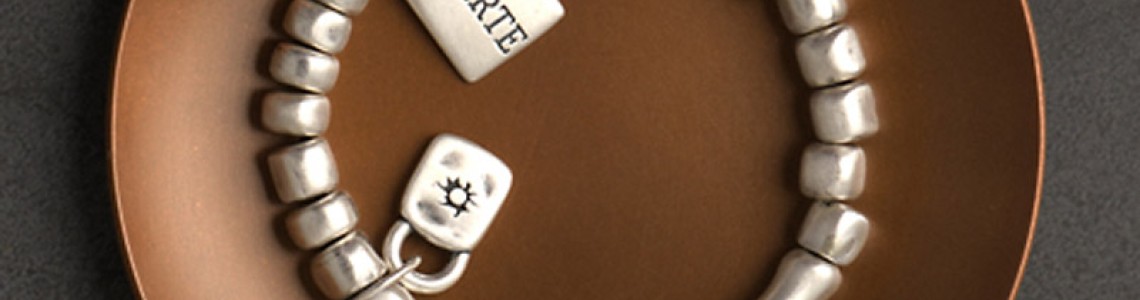
Quick answer: A 925, 990 or 999 mark is a fineness statement: it represents parts of silver per thousand in the material the mark is intended to describe. A simple number is not, by itself, proof of authenticity, origin, maker, total bracelet composition or independent testing. Read the mark together with the seller's identity, construction disclosure, invoice, product weight and any jurisdiction-specific hallmark.
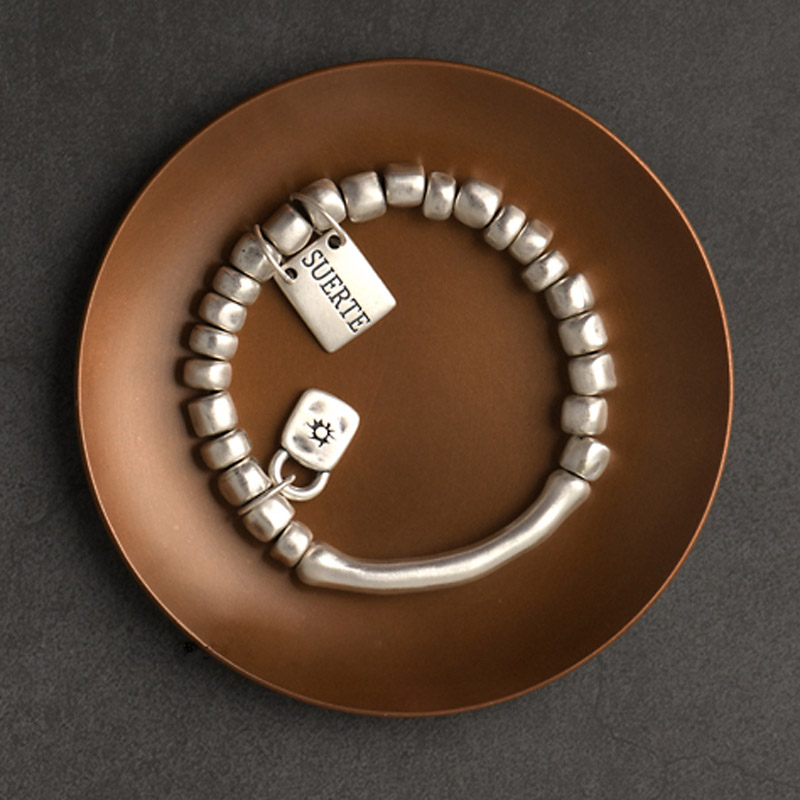
A number stamp and a complete hallmark are not the same thing
A small “925” stamp may be applied by a manufacturer as a fineness claim. A legally recognised hallmark in a jurisdiction with compulsory assay can contain several coordinated elements. UK government guidance, for example, explains that a complete UK hallmark includes a sponsor's or maker's mark, a metal-and-fineness mark and an Assay Office mark. Optional date or traditional fineness symbols may also appear.
That UK system should not be imposed on every item sold worldwide. Marking rules, exemptions and enforcement differ by market. The useful buying principle is broader: identify what kind of mark you are looking at, who stands behind it and whether it represents independent testing or only a manufacturer's claim.
How to translate 925, 990 and 999
| Mark | Literal millesimal reading | What it does not establish |
|---|---|---|
| 925 | 925 parts silver per 1,000; commonly called sterling silver | It does not identify the remaining alloy or prove every component is sterling. |
| 990 | 990 parts silver per 1,000 | It does not prove a laboratory tested the item or that the construction is solid. |
| 999 | 999 parts silver per 1,000; commonly described as fine silver | It does not mean absolute purity, superior workmanship or immunity from wear. |
The FTC's U.S. consumer guidance explains the 925 reading and notes that silver-plated products use a silver layer over a base metal. This is why the material noun and construction qualifier must be read together. “925 silver” and “925 silver plated” do not describe the same object.
What a silver mark cannot prove
A mark cannot show, on its own, whether the item matches the listing, whether the stamp was applied accurately, who made it, where it was made, how much it weighs or whether every soldered, threaded or decorative component shares the same fineness. It cannot distinguish solid from hollow construction unless the description provides that information.
Photographs are also limited. Lighting, polishing and camera processing can make different alloys look similar. Treat the mark as one data point and build corroboration from the complete product record.
Solid, hollow, plated and mixed-material bracelets
- Solid: the described component is metal throughout, though solder or small functional parts may have separate specifications.
- Hollow: the form has an internal void; it can be genuine silver while weighing less and denting differently from a solid equivalent.
- Plated: a surface layer of silver or another metal covers a different substrate. The coating and base should be disclosed.
- Mixed material: silver is combined with cord, elastic, stone, brass, steel or another material. A headline fineness should not be assumed to cover every part.
A hallmark or stamp may appear only on the component that can physically receive it. Ask which part carries the mark and which parts are included in the fineness claim.
Maker, sponsor and responsibility marks
Accountability strengthens a fineness claim. In the United States, FTC consumer guidance says silver items should also show the name or U.S. registered trademark of the company or person that stands behind the mark. In the UK hallmarking framework, the sponsor's mark identifies the registered party that submitted the article for hallmarking.
The systems are not identical, but both illustrate an important idea: a number without an accountable party provides less information. On an online listing, record the store name, product model, business contact details and written specification. These records matter if the delivered item differs from the description.
A seven-step online verification routine
- Read the full material phrase, not only the number in the title.
- Identify the component the fineness applies to.
- Check for plated, coated, hollow, filled or mixed-material wording.
- Look for a seller, maker or sponsor identity connected to the claim.
- Compare stated dimensions and weight with the photographs.
- Save the product page, order confirmation and return conditions.
- Inspect the delivered mark and construction before wearing or altering the item.
If independent verification is important for a high-value purchase, ask which assay or documentation is available before payment. A magnet test, ice test, polishing cloth or social-media “hack” cannot replace a properly scoped professional assessment.
Listing language that deserves clarification
Terms such as “silver tone,” “silver color,” “German silver” or “nickel silver” do not mean sterling silver. A title that says “925” while the specification says only “alloy” is internally inconsistent. Likewise, a seller should not use a photograph of a stamp as a substitute for describing whether the item is solid, plated or mixed.
Ask a direct question: “Which component is 925/990/999 silver, and is it solid, hollow, plated or combined with another metal?” Keep the answer with the order record.
Inspecting the delivered bracelet
Confirm the model, size, visible design and stated components first. Locate the mark without scraping or aggressive polishing. Check for obvious construction differences, loose elements, damaged holes, coating loss or a weight that materially contradicts the listing. Natural handmade variation is different from a different material or missing feature.
Contact the seller promptly if something does not match. Do not alter, resize or chemically test the bracelet before resolving a description dispute because those actions can affect condition and return eligibility.
When professional testing is appropriate
Professional assay can be appropriate when value, insurance, resale, legal compliance or a material dispute justifies it. Testing methods have different limitations and may be destructive or surface-sensitive. Ask the professional what will be tested, whether plating could affect the result and whether the report covers the whole article or one location.
For ordinary online shopping, clear disclosure and accountable service prevent many problems before testing becomes necessary. Browse the sunMYLOVE silver bracelet collection and compare each product's written material and construction details.
Markings versus material performance
This guide is about interpreting evidence, not choosing the best alloy for wear. For softness, construction, tarnish and use-case differences, read the separate 925 vs 990 vs 999 silver bracelet comparison. Keeping these questions separate prevents the same page from trying to rank for both authentication and alloy-selection intent.
Continue your research
- Sterling silver bracelet care guide
- Silver bracelet health-claims evidence guide
- Silver bracelet research hub
Frequently asked questions
Does a 925 stamp prove sterling silver?
No. It is a fineness claim and should be supported by seller identity, construction disclosure, documentation and, where applicable, a recognised hallmark or professional test.
Is a simple 999 stamp a hallmark?
Not necessarily. A full hallmark may require several marks under a jurisdiction's rules. Determine which marking system applies.
Can one bracelet contain different silver finenesses?
Yes. Beads, clasps, solder and decorative parts may have different specifications. The listing should identify material scope.
Does 925 mean the bracelet is solid?
No. Fineness and construction are separate. A sterling component can be solid or hollow, and another product may be silver plated over a base.
Can I authenticate silver from a photograph?
No. A photograph can document a visible mark and design, but it cannot establish bulk composition or independent testing.
Sources and editorial scope
- FTC consumer guidance on platinum, gold and silver jewelry
- FTC Jewelry Guides, 16 CFR Part 23
- British Hallmarking Council practical hallmarking guidance
Editorial note: This guide explains how to interpret marks and build a documentation trail. It does not authenticate an individual item, provide a valuation or assert that one country's hallmarking rules apply worldwide. Reviewed by the sunMYLOVE product content team on July 20, 2026.
Leave a Comment