
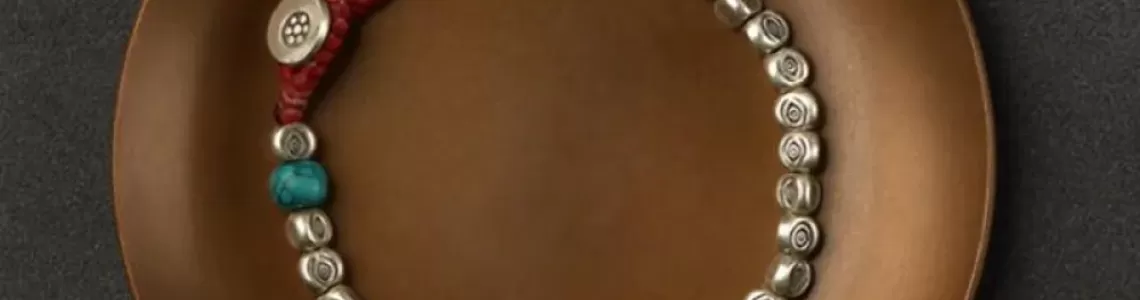
Answer first: a red string bracelet with sterling silver beads should be judged as a mixed-material bracelet, not as a medical device, protective guarantee or proof of a single universal tradition. The useful buyer checks are practical: whether the silver component is described as 925 sterling silver or another fineness, whether the red cord construction fits daily wear, whether the bracelet can be adjusted without stressing the cord, whether skin-contact and water-care limits are clear, and whether cultural or "good luck" wording is presented as symbolism rather than evidence of health, protection or changed fortune.
This guide is written for shoppers comparing sunMYLOVE's Eye of God 925 Sterling Silver Red String Bracelet with other silver bead designs such as the 999 fine silver bead bracelet, the SUERTE 999 fine silver bracelet, and the multi-layer silver medal bracelet. It does not authenticate a spiritual tradition, certify a blessing, verify religious use, prove silver content for a specific item, promise protection from the evil eye, prevent illness, improve luck, reduce anxiety, change relationships or substitute for a return-policy check.
Research question and evidence scope
The research question is narrow: when a bracelet combines red cord, an eye or good-luck motif and silver beads, what can a buyer responsibly check before ordering? The answer has three layers. First, silver words have a regulatory and consumer meaning. The FTC consumer guidance explains how terms such as silver, sterling and 925 are used in jewelry buying, while the federal Jewelry Guides in 16 CFR Part 23 set boundaries for silver descriptions in industry products. CBP and Competition Bureau Canada guidance add the same practical habit: a quality mark or fineness word should be read as a description that needs responsible seller support, not as a photo-only assumption. Second, red string meaning is cultural, religious or personal, not a testable performance claim. Museum and education sources on red thread symbolism show that meanings vary and that responsible wording should not flatten different traditions into one guaranteed effect. Third, the cord is a wear component. A bracelet can be meaningful and still fail if the knot, adjustment, water exposure or daily abrasion is ignored.
The article therefore separates verified facts, reasonable buyer inferences and evidence limits. Verified facts include the existence of regulatory guidance around silver terminology and the product-page wording that says 925 sterling silver. Reasonable inferences include the need to clean silver gently, keep cord dry and avoid treating symbolic language as a lab claim. Evidence limits are just as important: a product photo cannot prove silver purity, a red cord cannot prove a religious blessing, and no source used here proves that wearing a red string bracelet protects health, prevents misfortune or improves relationships.
Candidate topics and why this one won
The candidate pool for today's run included red string bracelet buyer checks, 999 fine silver bead weight and care, 990 versus 999 fine silver softness, multi-layer silver bracelet snag risk, silver medal bracelet symbolism boundaries, spiral nail brass cuff safety, aquatic agate naming, and green linden root bracelet material wording. Red string with sterling silver won because it directly supports a live P1 product, has a distinct buyer task, has enough authority sources, and avoids cannibalizing existing sunMYLOVE articles about sterling versus fine silver, silver authenticity, silver plating, jade, agate, Dzi beads, bone beads, ebony, pearl and black hair crystal.
The rejected topics were not useless. The 999 and 990 fine-silver ideas have commercial value, but they risk repeating the existing fine-silver comparison and authenticity pages unless they are saved for a future product-specific sizing article. Multi-layer snag risk is practical but currently has weaker independent source support. Spiral nail cuff safety overlaps brass cuff and brass safety content. Aquatic agate and linden root are relevant but lower priority than the red-string product because their available evidence would be mostly material naming and care rather than a broader symbolic-and-regulatory buyer problem.
Key terms for a red string silver bracelet
| Term | Evidence-safe buyer meaning | What it does not prove |
|---|---|---|
| 925 sterling silver | A silver alloy description associated with 925 parts per thousand pure silver under U.S. consumer guidance. | That a particular product is verified without seller records or assay evidence. |
| 999 fine silver | A higher-fineness silver wording often used for very pure silver bead designs. | That it is tougher than sterling silver or automatically better for every bracelet. |
| Red string | A cord color and symbolic design element with meanings that vary by culture, religion and personal use. | Universal protection, medical effect, guaranteed luck or verified ritual status. |
| Eye motif | A visual symbol that many buyers associate with watching, warding or amulet-like ideas. | That the bracelet has a proven protective effect. |
| Mixed-material bracelet | A bracelet whose wear limits come from metal, cord, knot, bead and finish together. | That the silver component alone determines durability or care. |
Silver content: what buyers can check
Silver wording should be read carefully because shoppers often compare 925 sterling, 990 fine silver and 999 fine silver products on the same site. The FTC's consumer guidance treats sterling silver as a meaningful term, and the federal Jewelry Guides explain that unqualified silver and sterling words should not be used loosely. For a buyer, that does not mean every online product is automatically verified; it means the words should trigger a documentation habit. Look for the product title, description, attributes, stamp information if visible, seller identity, return policy and any explanation of whether the silver beads are solid silver, plated, coated or mixed with base metal components.
For the sunMYLOVE red-string product, the key phrase is 925 sterling silver. That phrase should not be confused with the site's 999 fine silver bracelets. Sterling silver can be more suitable for some wearable components because alloying improves practical strength compared with very soft pure silver, while fine silver can be valued for purity and a different tactile feel. Neither wording is automatically superior. The correct decision depends on bead size, cord construction, skin contact, finish, price and how the bracelet will be worn.
Cord and knot construction matter as much as silver
A red string bracelet is not only a silver purchase. The cord carries tension every time the wearer puts the bracelet on, adjusts it, sleeps in it, removes it for showering or catches it on clothing. A small silver bead may stay intact while the cord fades, stretches, absorbs water, weakens at the knot or frays near a metal edge. This is why the safest care advice is mixed-material care: keep it dry, avoid sanitizer and perfume contact, do not pull the cord hard, and inspect knots or sliding closures before travel or daily wear.
Adjustability deserves special attention. A bracelet that is too tight can stress knots and press silver beads into the skin. A bracelet that is too loose can snag. Use the bracelet buying guide to measure the wrist, then choose a fit that allows normal movement without turning the string into a constant tension line. If the listing offers a selected wrist size, use the listed sizing process rather than guessing from a model photo.
Symbolism: useful, personal and limited
Red string symbolism has no single global meaning. In East Asian and contemporary art contexts, red thread can stand for connection, body, relationship, memory or fate; the Art Gallery of South Australia's Chiharu Shiota resource is a museum example of red string being used symbolically rather than as a literal charm. A Tenement Museum-hosted red string bracelet story shows a different, personal cultural account of Buddhist-family practice and protective meaning. These sources are useful because they show situated meanings, not universal rules. Museum context and personal cultural memory are not clinical evidence.
The buyer-friendly way to handle this is simple: a red string bracelet can be chosen because the wearer likes the symbol, the color, the memory, the gift intention or the cultural reference. It should not be sold or purchased as if the cord has been proven to prevent illness, neutralize envy, guarantee safety, fix anxiety, attract love, remove bad luck or alter fate. A retailer can respect symbolic language by making the boundary visible.
How to inspect a red string sterling silver bracelet online
1. Read the exact silver phrase
Check whether the page says 925 sterling silver, 999 fine silver, 990 fine silver, silver color, silver plated or only silver-tone. If the phrase is 925 sterling silver, compare it with the FTC and eCFR wording and expect the product to be described consistently across title, meta description, attributes and visible copy. If different parts of a page use different fineness claims, pause and ask before buying.
2. Check whether the cord is a feature or a weak point
Red cord is the visual center of this product type, but cord is also a replaceable wear material. Look for clear photos of knots, bead holes, closure points and the way the silver bead sits against the string. A neat product photo is helpful, but it cannot show months of wear. If you plan to wear the bracelet daily, treat cord inspection as part of the purchase, not an afterthought.
3. Separate motif from effect
Eye, good-luck, heart, celestial and medal motifs can all be meaningful gift language. They should not be treated as proof of a result. Compare the red-string item with sunMYLOVE's SUERTE good-luck bracelet and multi-layer silver medal bracelet: the symbolism changes, but the buyer still needs material, size, care and policy clarity.
4. Confirm store logistics before treating it as a gift
A symbolic bracelet is often bought for birthdays, relationships, travel, recovery milestones or personal reminders. The practical part still matters. Review FAQ, shipping and delivery, and returns and refunds before ordering. A meaningful gift is easier to enjoy when the size, delivery timing and return window are understood.
Decision table: product wording versus buyer response
| If the listing says | Safer buyer reading | Question to ask |
|---|---|---|
| 925 sterling silver red string bracelet | Mixed silver-and-cord bracelet with a sterling silver claim. | Is the silver wording consistent in the title, specs and description? |
| Good luck bracelet | Symbolic gift language. | Does the page avoid promising real-world outcomes? |
| Eye of God bracelet | Visual or symbolic eye motif. | Is the motif explained without claiming proven protection? |
| Red rope or red cord | Textile component that controls water and abrasion care. | How should knots, cord and silver beads be cleaned? |
| 999 or 990 silver comparison | Different silver-fineness product family. | Does the bracelet need purity, strength, softness or a specific bead look? |
Care checklist for daily wear
- Put the bracelet on after lotion, perfume, sunscreen and sanitizer are dry.
- Remove it before swimming, showering, sleeping, gym work, gardening or heavy hand use.
- Wipe silver beads with a soft dry cloth; do not soak the red cord.
- Do not use bleach, alcohol, acetone, abrasive polish, ultrasonic cleaning or steam cleaning on the assembled bracelet.
- Keep the bracelet away from salt water and chlorinated water because the cord and metal can both suffer.
- Inspect knots and sliding closures if the bracelet suddenly feels looser or tighter.
- Store it dry and separate from sharp chains, rings or cuff edges that can abrade the cord.
- If color transfers from the cord, silver darkens quickly, or a knot starts to fray, stop wearing it and contact the seller.
Common buying mistakes
- Assuming every red string bracelet comes from one culture or one rule set.
- Buying a protection or healing promise instead of checking material facts.
- Confusing 925 sterling silver with 999 fine silver.
- Ignoring cord durability because the silver bead looks solid.
- Choosing size from a photo rather than measuring the wrist.
- Wearing the bracelet in water and then blaming the silver when the cord weakens.
- Assuming an eye motif proves ritual authenticity.
- Skipping return and delivery checks for a time-sensitive gift.
How this applies to sunMYLOVE products
The Eye of God 925 Sterling Silver Red String Bracelet should be evaluated first as a red cord and 925 sterling silver bead design. Buyers can appreciate the eye motif and red-string symbolism while still asking ordinary purchase questions: What silver fineness is claimed? How does the cord close? Which wrist size should be selected? Will the wearer remove it before water exposure? Are delivery and returns acceptable for the gift date?
The 999 fine silver bead bracelet and SUERTE good-luck bracelet are useful comparisons because they move the decision toward silver fineness and bead style rather than cord symbolism. The freshwater pearl and 925 sterling silver bracelet shows another mixed-material case where care is set by the most sensitive component, not by silver alone. These comparisons help the buyer choose a bracelet for evidence, wearability and taste rather than for an unsupported promise.
FAQ
What does a red string bracelet mean?
Meaning depends on culture, religion, family practice and personal interpretation. It may be used as a symbol of protection, connection, memory, fate or good intention, but those meanings should not be presented as a guaranteed effect.
Is a red string bracelet with 925 silver real sterling silver?
The phrase 925 sterling silver has a recognized jewelry meaning, but a buyer should still check the product description, seller identity, markings if visible and return policy. A web page photo alone cannot assay silver content.
Is 925 sterling silver better than 999 fine silver?
Not universally. Sterling silver is an alloy associated with practical strength, while 999 fine silver is higher purity and softer. The better choice depends on bracelet design, bead size, cord, wear habits and personal preference.
Can a red string bracelet protect me from bad luck or the evil eye?
There is no reliable evidence that wearing a red string bracelet guarantees protection, health benefits, luck, relationship results or safety. Treat protective language as cultural or personal symbolism unless a source is making a clearly limited historical claim.
Can I shower with a red string silver bracelet?
No. The safer choice is to remove it before showering, swimming or heavy sweating. Water, soap, chlorine, salt and friction can weaken cord and affect silver appearance.
How should I clean a sterling silver red cord bracelet?
Use a soft dry cloth on the silver beads and avoid soaking the bracelet. Do not use ultrasonic cleaners, steam, bleach, acetone, alcohol or abrasive polish on the assembled cord-and-silver piece.
Which wrist should a red string bracelet be worn on?
Rules vary by tradition and personal practice. If the bracelet is a fashion or gift item, comfort and fit matter most. Avoid presenting one wrist rule as universal unless you are following a specific tradition and source.
What should I check before giving one as a gift?
Check wrist size, closure type, silver wording, care limits, delivery timing and return policy. If the symbolism matters, include it as a personal message rather than a claim that the bracelet will cause a result.
Method, limitations and editorial note
This guide was prepared from current sunMYLOVE product pages, local product keyword mapping, existing sunMYLOVE blog inventory and accessible authority sources. Search volume is recorded as UNKNOWN unless a verified first-party or named third-party data source is available. The article does not modify product records, prices, stock, options, product photos, cart, checkout, account, order, payment, shipping, cache, robots, canonical or sitemap settings. It is a research-style buying guide for adult fashion jewelry, reviewed on 2026-08-27.
References and evidence scope
- FTC, Buying Platinum, Gold, and Silver Jewelry - consumer guidance for silver, sterling and 925 descriptions.
- 16 CFR Part 23, Jewelry Guides - U.S. jewelry industry guide text for precious-metal descriptions.
- U.S. Customs and Border Protection, Marking precious metal, gold, or silver jewelry - quality-mark and responsible-party context.
- Competition Bureau Canada, Guide to the Precious Metals Marking Act and Regulations - official silver and .925 quality-mark guidance.
- FTC, In the Loupe: Advertising Diamond, Gemstones and Pearls - truthful jewelry advertising context.
- Art Gallery of South Australia, Chiharu Shiota - museum education context for red string symbolism and relationships.
- Tenement Museum, Red String Bracelet - museum-hosted personal cultural story showing meaning as situated rather than universal.
Leave a Comment