
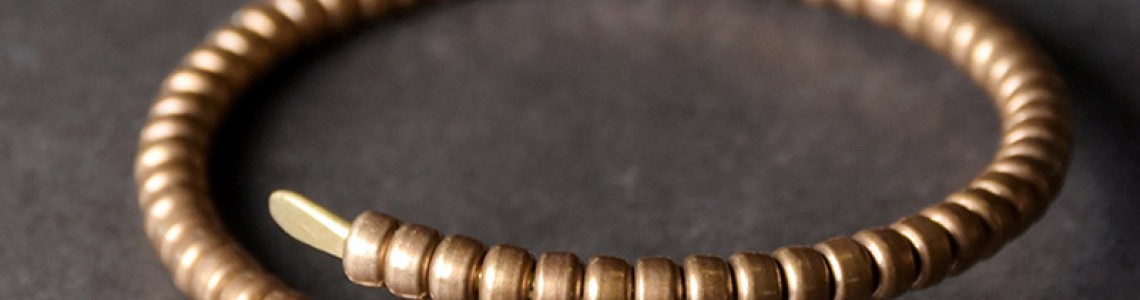
Quick answer: Copper is an elemental metal, while brass is primarily an alloy of copper and zinc. Brass usually looks warmer and more gold-toned; copper is redder. Both can darken, develop patina and leave temporary skin marks. Choose by verified composition, construction and fit—not by color or health promises.
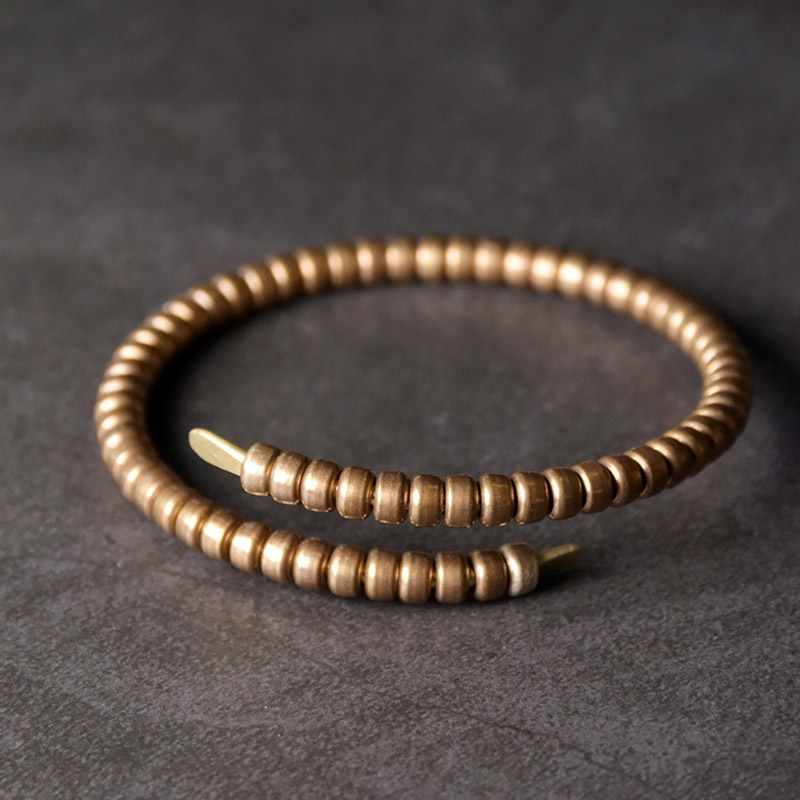
At a glance
- Confirm whether the listing says brass, copper, plated metal or mixed material.
- Expect natural surface change; patina is not automatically a defect.
- Start cleaning with a soft dry cloth and escalate only when the product allows it.
- Do not repeatedly bend a cuff to force a fit.
- Treat either metal as jewelry, not therapy.
Composition changes how the bracelet behaves
Copper is a chemical element. Brass is a family of copper-zinc alloys, so its exact color, hardness and response to wear can vary with composition and finish. A yellow-gold appearance does not prove that an item is solid brass, and a reddish surface does not prove purity. Read the written material specification, then check whether the design includes plating, lacquer, stone, enamel or intentionally oxidized areas. Those details determine which cleaning methods are safe. If a seller uses only a color term such as ‘gold tone’ or ‘copper color,’ ask for the actual material before buying.
Patina, tarnish and skin marks
Copper-containing metals react with air, moisture, cosmetics and skin chemistry. Darkening or green-blue compounds may form on an unsealed surface, especially in humid conditions. A temporary green mark on skin is usually a surface-transfer issue rather than proof of allergy or ‘toxins leaving the body.’ Remove the bracelet, wash and dry the area, then clean the piece according to its finish. Stop wearing it if redness, itching, swelling or persistent irritation occurs. A clear barrier or factory coating can slow change, but coatings eventually wear and should not be replaced with an unknown household varnish.
A conservative cleaning method
First wipe the bracelet after wear with a clean, soft cloth. For plain, uncoated metal, a slightly damp cloth followed by complete drying may be enough. Avoid acids, abrasive pastes and aggressive polishing on plated, blackened, textured, inlaid or mixed-material pieces because they can remove intentional finish or damage adjoining components. Store the bracelet dry and separately from harder jewelry. If you want to preserve an aged surface, polish only the raised areas—or do not polish at all. Product-specific care instructions always take priority over generic internet remedies.
What the evidence says about health claims
Copper is an essential nutrient when obtained through food, but wearing decorative copper is not the same as taking a medically indicated nutrient. A randomized, double-blind, placebo-controlled crossover trial indexed by PubMed found no meaningful therapeutic effect from copper bracelets for rheumatoid arthritis. That finding does not prevent someone from enjoying the color, weight, symbolism or patina of copper jewelry; it means pain, inflammation, circulation and mineral-deficiency claims should not be used as purchase evidence. Discuss symptoms with a qualified clinician rather than relying on jewelry.
Practical decision checklist
- Identify the exact material, finish and construction stated on the product page.
- Measure the intended wrist and follow that product's sizing convention.
- Check how water, cosmetics, friction and storage affect every component.
- Confirm quantity, delivery timing, return terms and customization limits before payment.
- Save the listing and order record, then inspect the delivered item before wear.
Continue your research
- Shop brass cuff bracelets
- Brass cuff bracelet guide hub
- How to measure wrist size
- Browse all sunMYLOVE bracelet guides
How to use this guide
Use this comparison beside the exact brass or copper listing. Confirm the stated alloy, surface coating and mixed-material components first; then apply the patina, skin-contact and cleaning guidance only to the relevant construction. If the seller cannot identify the metal beyond a color term, obtain clarification before ordering.
Frequently asked questions
Is brass the same as copper?
No. Brass is a copper-based alloy that usually contains zinc; copper is an elemental metal.
Why did my wrist turn green?
Copper-containing surface compounds can transfer in moisture. Clean and dry both skin and jewelry; stop use if irritation persists.
Can a brass cuff be resized by bending it?
A small adjustment may be allowed by a product, but repeated flexing can fatigue metal or damage inlays. Follow the listing.
Does a copper bracelet treat arthritis?
Reliable clinical evidence does not support using a copper bracelet as arthritis treatment.
Sources and editorial scope
- Randomized controlled trial of copper bracelets for rheumatoid arthritis (PubMed)
- FTC Jewelry Guides (16 CFR Part 23)
Editorial note: Prepared and reviewed by the sunMYLOVE product content team. Material, care and consumer-information statements were checked against the sources above and the store's published product specifications. We do not invent laboratory testing, professional credentials or medical benefits. Last reviewed: July 20, 2026. This guide is educational and is not medical advice; jewelry should not replace diagnosis or treatment.
Leave a Comment