
Quick answer: Choose bead material by the look, weight, variation and care you can accept. Stone usually feels denser; wood and root beads are lighter and more moisture-sensitive; brass brings warm contrast; silver adds a precious-metal element; cord and assembly determine fit and service life.
At a glance
- Natural pattern variation is normal and should be disclosed.
- Appearance alone cannot authenticate a stone or metal.
- Construction and cord are as important as the beads.
- Measure the wearer instead of relying on ‘one size fits all.’
- Care for the most delicate component in a mixed design.
Stone, glass and appearance-based names
Natural stone beads can vary in veining, inclusions, translucency and color from the photographed sample. Those differences can be desirable, but a responsible listing should not promise identical patterning. Glass and manufactured materials can also be attractive and consistent; they should simply be named accurately. A photograph cannot establish mineral identity, treatment or origin. Use the written specification, ask whether the name is a verified material or a design description, and avoid assuming that color implies a particular gemstone.
Wood, Bodhi root and other organic beads
Wood and root beads are usually lighter than comparable stone. Grain, pores and tone vary, and prolonged water exposure can swell, dull or crack organic material. Fragrance, hand sanitizer and household cleaners may stain a porous surface. Wipe gently after wear and allow the bracelet to dry at room temperature. Do not soak it or place it near heat. An oiled or polished finish will age differently from an unfinished one, so product-specific care matters more than a universal ‘wood bracelet’ recipe.
Metal accents and mixed-material care
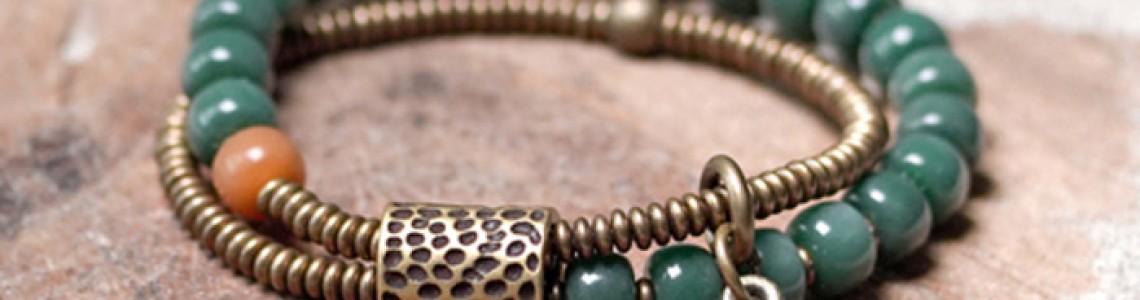
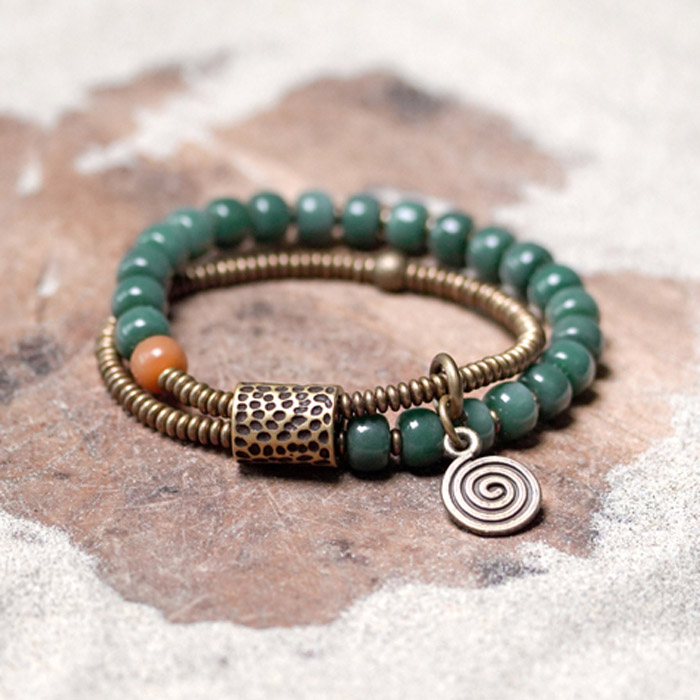
Brass accents create warm contrast and can develop patina. Silver components can tarnish and may be solid, hollow, plated or intentionally oxidized. The metal description should distinguish those constructions. When metal sits beside porous stone or wood, use the least aggressive method that is safe for every part. Metal polish can lodge in bead pores or remove a darkened decorative finish. Work locally with a cloth rather than immersing the whole bracelet.
Cord, elastic and fit
Elastic is convenient but should roll over the hand rather than being stretched hard. Braided or sliding cord can provide range, yet knots and ends need inspection. Multi-strand pieces place different loads on their connectors. Measure the wrist at the intended position and select the exact option shown on the product page. If the page states finished inner circumference, do not automatically add allowance; if it requests bare wrist circumference, send that measurement. The product's sizing instructions control.
Practical decision checklist
- Identify the exact material, finish and construction stated on the product page.
- Measure the intended wrist and follow that product's sizing convention.
- Check how water, cosmetics, friction and storage affect every component.
- Confirm quantity, delivery timing, return terms and customization limits before payment.
- Save the listing and order record, then inspect the delivered item before wear.
Continue your research
- Shop handmade beaded bracelets
- Men's beaded bracelet guide hub
- How to measure wrist size
- Bracelet gift guide for him
How to use this guide
Use the material sections as a comparison matrix: shortlist the weight, surface variation and maintenance level you prefer, then verify those attributes on the exact bracelet page. A trade name identifies a shopping category, not laboratory authentication, so retain the written specification with your order.
Frequently asked questions
Are two natural-bead bracelets identical?
Usually not. Natural color, grain and pattern can vary within the stated material.
Which beads are lightest?
Wood and root beads often feel lighter than stone of similar size, but construction also matters.
Can I shower with a beaded bracelet?
Avoid prolonged moisture unless the specific product explicitly permits it.
How do I choose a size?
Measure the wrist where the bracelet will sit and match the listing's measurement convention.
Sources and editorial scope
Editorial note: Prepared and reviewed by the sunMYLOVE product content team. Material, care and consumer-information statements were checked against the sources above and the store's published product specifications. We do not invent laboratory testing, professional credentials or medical benefits. Last reviewed: July 20, 2026.
Leave a Comment